

Archive for the ‘Camera Trapping’ Category
Nikon D700 trail cam: The first set
Elephant, banteng, civet and bat captured

Wild elephant; not sure why the cam tripped with the jumbo on the far side of the sensor??
Went into Huai Kha Khaeng to check my D700 trail cam a couple of days ago….the weather was horrible with a big storm brewing and rain had already started to fall. I had to get in and get out.

The young elephant headed for the cam; and it tripped again.
Instead of topping up the card, batteries and desiccant, I decided to pull the unit and two flashes that were not working. One Nikon SB28 flash was still OK and I left it.

A powerful trunk that tried to move the cam but could not budge it.
After downloading the card, I got a pleasant surprise that the D700 had performed quite well on its first stint. Elephant, banteng, a civet plus a bat had tripped the cam.
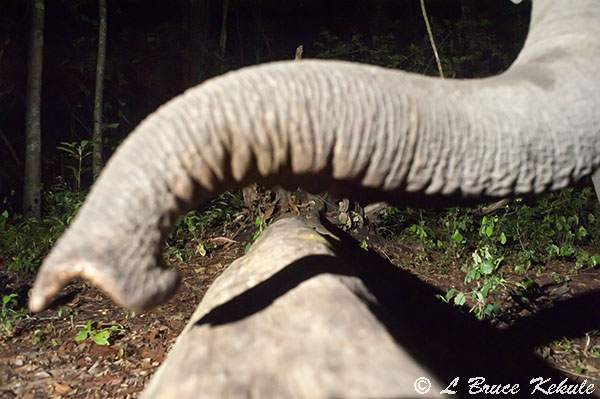
This elephant ripped most of the camouflage netting off the cam.
There were some strange false triggers but I guess with bats or birds that fly through, the unit will trip to an empty frame. I was elated to say the least.

A mature banteng bull.
I will go back in a week and will move the D700 about two-three feet closer as there is too much log in the frame and the composition is still not right.
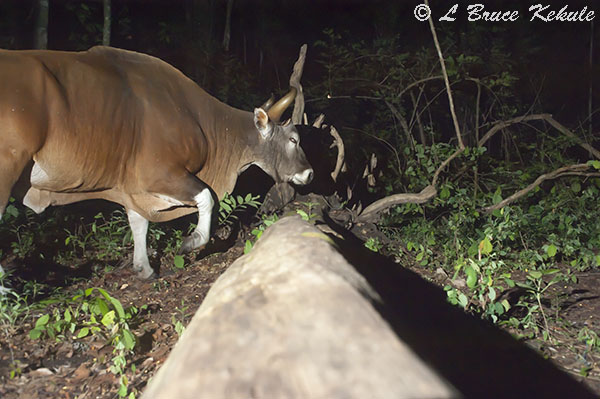
This bull looks like he is blind in the right eye.
The elephants ripped most of the camouflage netting off the cam but it survived intact and was still as solid as the log meaning they could not budge it. The moss was OK.
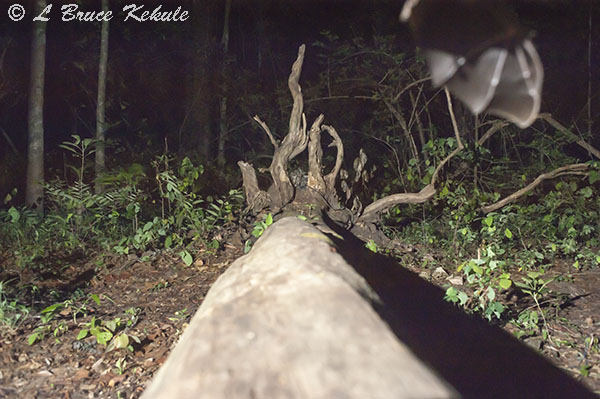
A bat flying through.
Needless to say, I look forward to more sets from this cam. I will be adding another flash to the right side of the log to get rid of the shadow. It is just a matter of time before a tiger or leopard jumps this log.

A common palm civet posing on the log.
Unfortunately, the civet was just inside the focal plane and therefore not in focus. But they are so common here, I’m positive I will get this critter again…! Enjoy.

The Nikon D7oo trail cam on a fallen tree.

Nikon D700 and Canon 350D trail cams on location
Nikon and Canon DSLR trail cams


Nikon D700 camera trap installed on a fallen tree trunk.
Set-up my Nikon D700 and Canon 350D at two locations in Huai Kha Khaeng that are frequented by tigers and leopards, plus many other Asian animals like elephant, gaur, banteng and more. Both cams trigger in continuous mode (three to four shots per actuation).
Nikon D700 camera trap with moss and old leaf camouflage.
The D700 was attached to a fallen tree with six legs bolted down with 3” x 3/8” stainless lag bolts. The transmitter was installed on an aluminum pole pounded into the ground and hidden in the tree roots.
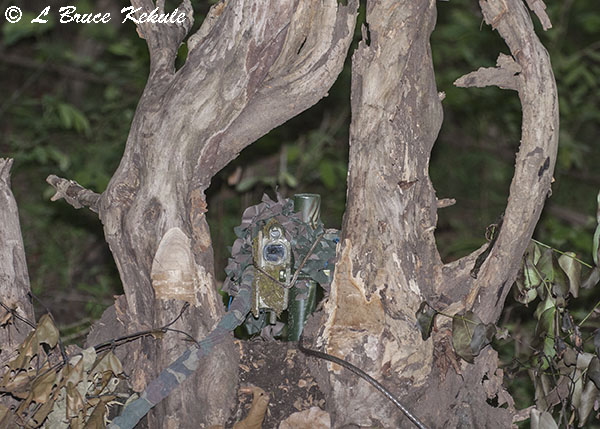
Nikon ML-3 active infrared transmitter in aluminum box.
The Canon 350D was bolted to a standing tree with four lag bolts. Python cables secure both cams and the transmitter to the tree. They are both solid and if an elephant can move the tree, they can move the cams.

Canon 350D and flash installed on a tree next to a wildlife trail.
The Nikon has three flashes set off by ‘YongNuo’ wireless flash triggers with ‘D’ cell externals and three Nikon SB28s. The flashes trigger on the second shot.

Canon 350D beefed-up snorkel.
The Canon has only two flashes (Canon 270EXs) at the moment and this cam triggers them with the ‘YongNuo’ on the second shot too. A third Canon flash is in for repair after some ‘D’ cells leaked and left some residue in the box. I have beefed-up the snorkel as shown here and this should keep the elephants at bay.

Canon 350D beefed-up snorkel – close up.
I’m using four AA ‘Energizer’ Lithium batteries as power in the flashes and we’ll see how long they can last. The next job would be to add externals or ‘flash battery packs’ if the Lithium batteries are not enough for a month’s soak. I’ll be checking the Nikon and the Canon on May 17th and post something after that.
A Black Leopard passes my camera trap
A series of images captured with a Sony S600 camera trap

A black leopard in mid-afternoon on a trail to a hotspring in Huai Kha Khaeng (cropped).
It is now late April in the forest of Huai Kha Khaeng Wildlife Sanctuary, my favorite-place in Thailand. The first rains have come and doused the dangerous forest fires that spread through the sanctuary during the dry hot season starting in March.
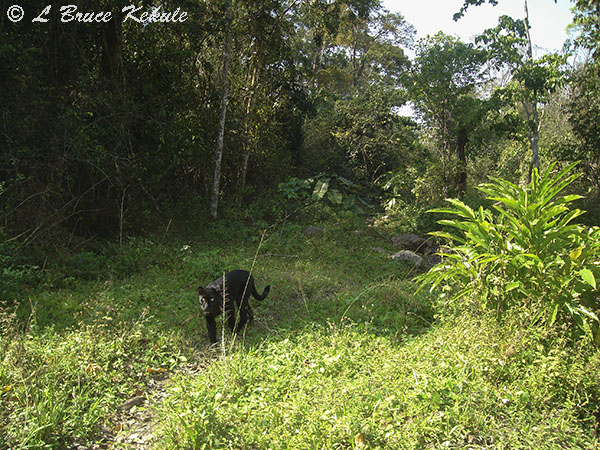
Full frame shot of the leopard.
As usual, I’m setting-up camera traps at various mineral deposits (natural seeps) around a ranger station deep in the interior accessible only by a dirt road. These waterholes are visited by all the large mammals including tiger and leopard, and provide excellent opportunities for some great animal shots.
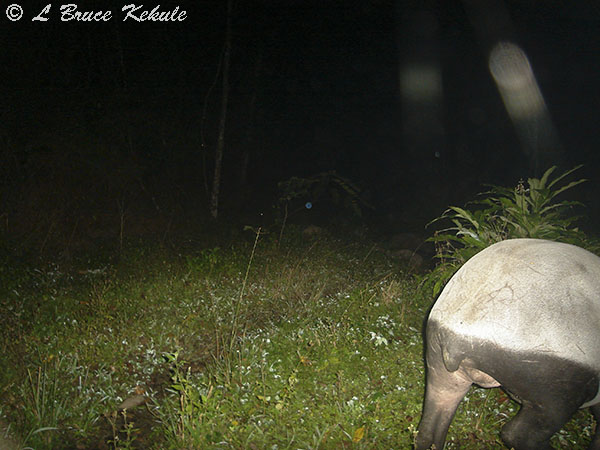
An Asian tapir passes by.
As I was going through a few of my old camera traps changing out cards and batteries, I decided to have a quick look at a 2GB card that was in my Sony S600/SSI/1020, one of my first cams using a Pelican box.

A young ‘tusker’ on the trail showing off.
Imagine my surprise to see a shot of a ‘black leopard’ in mid-afternoon walking on the trail. Other denizens caught include elephant, tapir, sambar, wild pig and muntjac (barking deer) over a month period back in February to early March of this year. The cam recorded some 400 images mostly elephants and sambar. It truly was a bonus and I actually closed out the program with this cam.
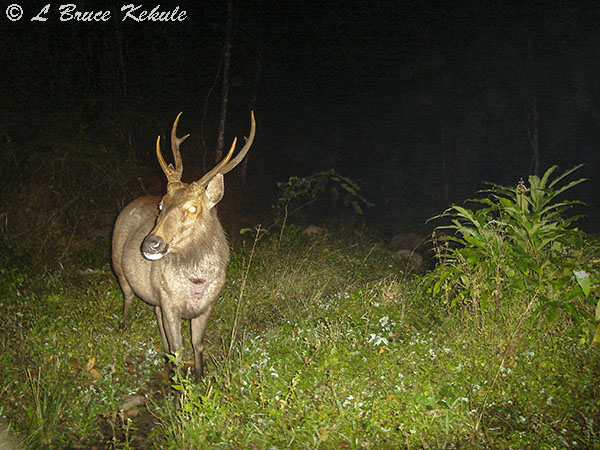
Sambar stag on the trail.
I actually forgot to download the card and if I had formatted it, only a recovery program could have got them back as long as I had not filled the card with other images. Been there done that…!

Another sambar stag checking out my cam.
The black leopard brought back fond memories of this place more than 15 years ago. I was sitting in a tree blind up by the hot springs when a black leopard walked in about 4pm and posed for me at several places for over an hour.
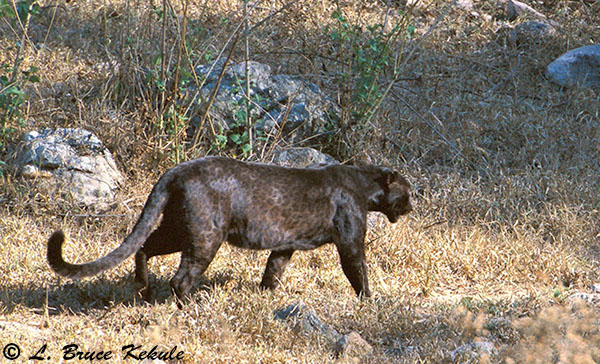
My first black leopard in the late afternoon sun showing its spots.
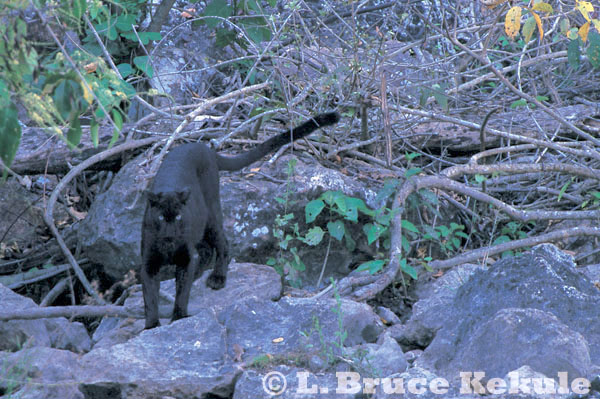
The mature cat up at the hot springs.

My leopard posing on a fallen tree.
These were in the old days of slide film, and I did not know how good the shots were until the film was processed. Here are a few images from that lucky sequence many years ago.
The morel of this story: Make sure you double-check and download all your cards before formatting, or you may loose some valuable images like I almost did…!
Some other images from this set:
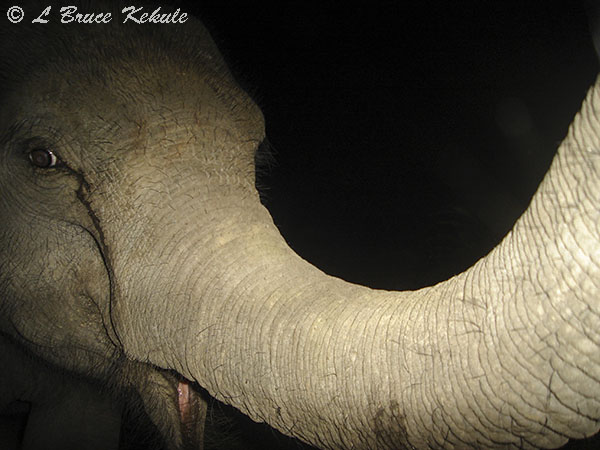
A very young elephant checking out the cam.

Looks like the bigger elephant lost part of its tail.
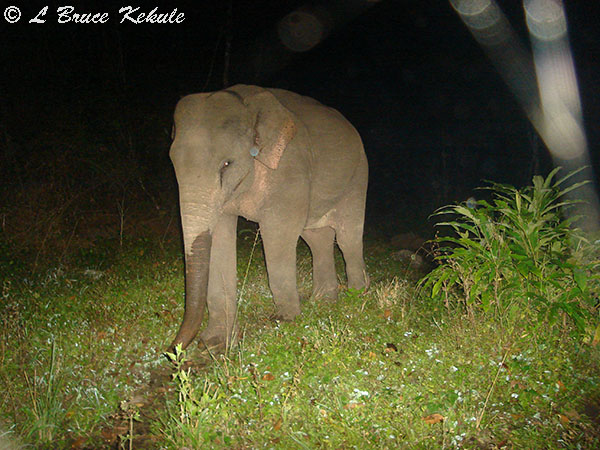
A youngish elephant on the trail.
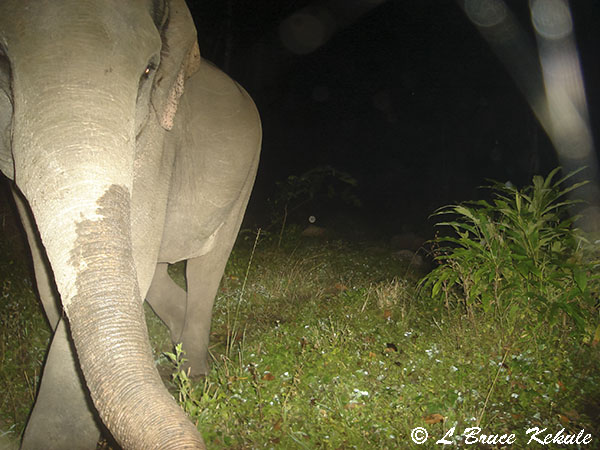
Same elephant checking out the cam.

A sambar stag feeding on grass.
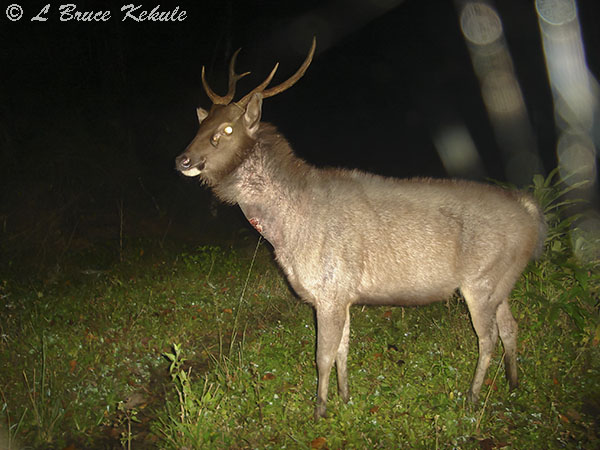
A mature sambar stag.

A young sambar stag.
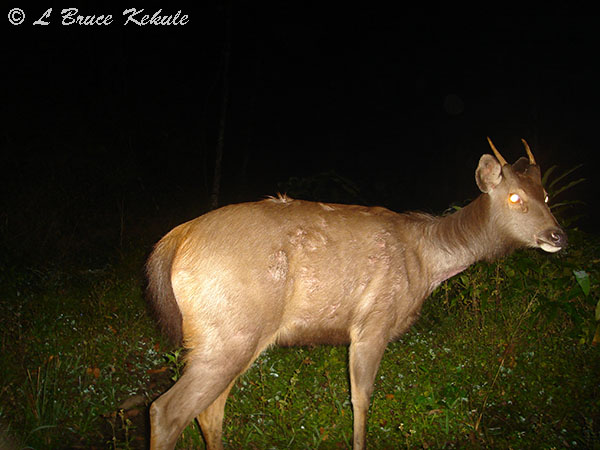
Another spike stag with blotches.

And yet another spike stag.
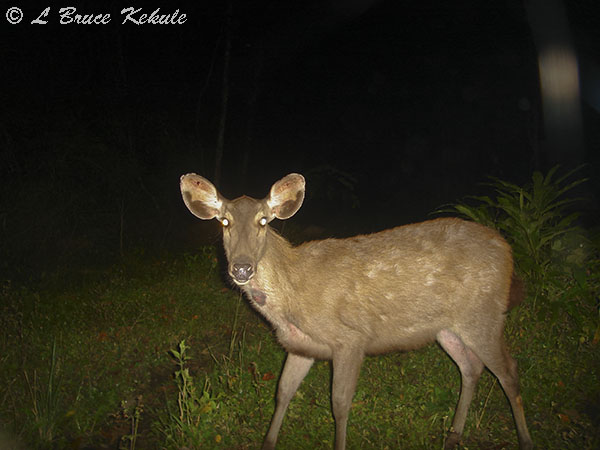
A sambar doe.
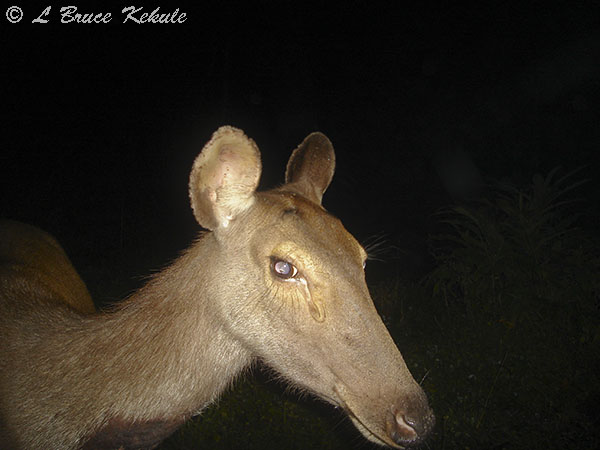
Sambar doe close-up.

A wild pig in the late afternoon.

A muntjac (barking deer) early in the morning.

The ‘tiger hunter’ after setting the cam.
Got an ‘Indochinese tiger’ with my DSLR Canon 350D trail cam

Indochinese tiger in Huai Kha Khaeng
Last year in March 2012, I did a post on a DSLR Canon 400D with three wireless Canon 270 flashes (http://camtrapper.com/viewtopic.php?f=5&t=5369). After months of failure, wrong settings and bad luck, I was at wit’s end. I set the cam in the forest but it would only work for a day or two and go dead. After consultations with TRLcam, I finally got the settings right. Then an elephant bashed in the snorkel and rainwater destroyed the cam, board and flash trigger. It was a mess and that Canon is now in my camera graveyard…!


Elephants on the trail
Fortunately, I had another Canon, a 350D that was working well with a Yeticam board with an EOS chip I got from Mark at Yeticam.com. As both cameras are about the same size, the slightly smaller one fits perfectly in the aluminum box with a Canon 18-55mm lens. All new components were replaced and I finally set the cam on my ‘new trail’ on Feb.3 and got back to it on March 31st.

Gaur bull
Imagine my surprise when I viewed the files and saw a tiger had passed and two flashes worked. I also got elephant, gaur and black bear but not before an elephant bashed the snorkel again. Fortunately, it did not rain this time and the cam and components are fine. Amazingly, the cam took some 500 images but most are black because of no flash power that had run out about two weeks into the stint.
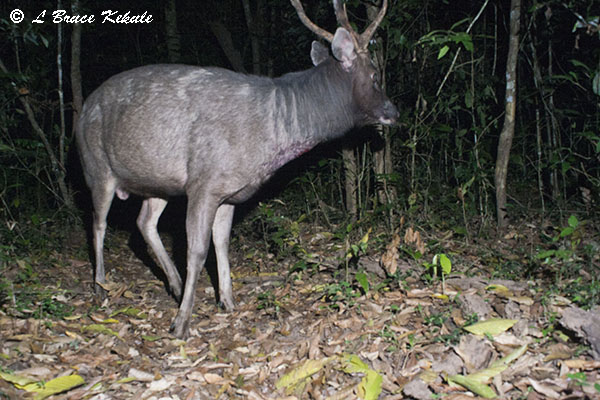
Sambar stag
It’s back to the drawing board on the snorkel and increased battery packs (2 ‘C’ or ‘D’ cells) for the flashes. Due to the extremely dry season and forest fire, I have just pulled all my cams until the first rains arrive.
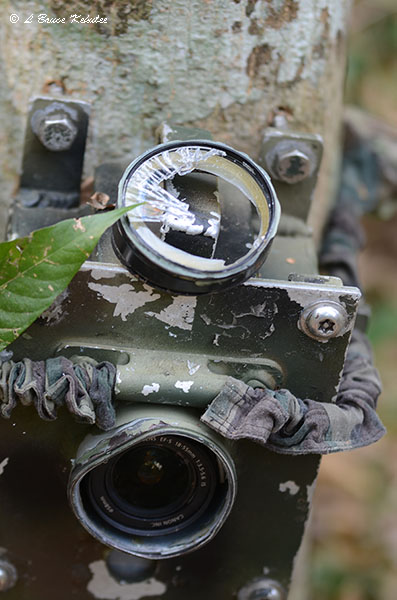
Busted camera damaged by elephants
I agree with TRLcam and a few others that a new forum should be set-up for DSLR camera traps as they are truly in a class of their own. Enjoy.

DSLR Canon 350D set-up
DSLR Nikon D700 camera trap
My most expensive, ambitious and largest trail cam yet: An old D700 is retired to stationary duty….!

Nikon D700 homebrew trail cam
This cam has been on the drawing board for a couple of years now and is finally finished and ready for the forest.
About 15 years ago, I set-up a Nikon N90s film camera with a Nikon ML-3 remote control in Huai Kha Khaeng on a sambar kill. That night, I got a whole roll of an Asian leopard and these were my first camera trap photos as seen here.
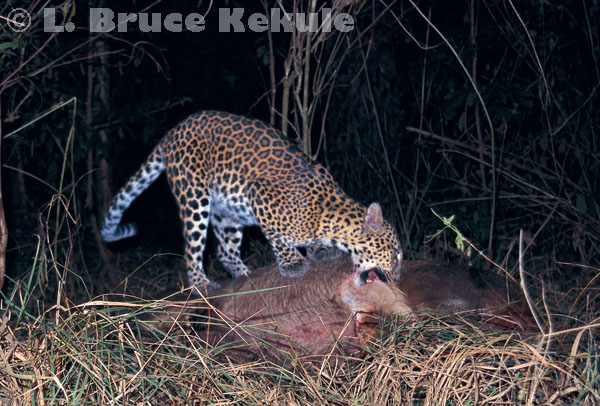
Asian leopard caught with a Nikon N90s film camera and a ML-3 remote sensor.
After some six years of continuous use in my wildlife photography (through the lens) work, it was about time to retire my old Nikon D700 DSLR with a battery pack and two Nikon lithium EN-EL3e Li-ion batteries.
It is a great camera that takes exceptional photographs because of its full-frame sensor. With a very ancient Nikon 35mm manual lens, the combo would make an excellent trail camera.
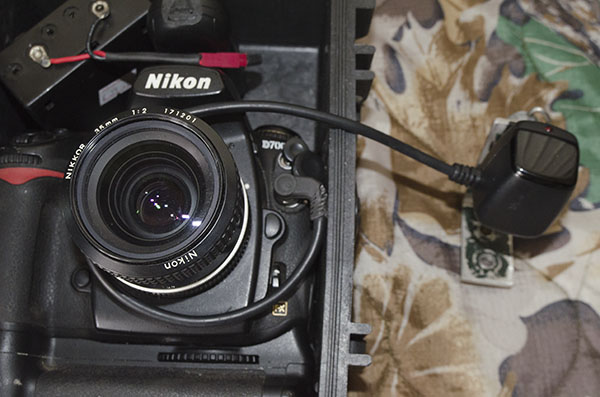
D700 and ML-3 close-up
A Nikon ML-3 ‘Modulite Remote Control Set’ (active infrared) unit consisting of a receiver plugged into the D700 housed in a Pelican 1150 case. I built this rig for tigers and other animals jumping over a fallen tree that lies across a heavily used wildlife trail. An aluminum housing protects the cam from marauding elephants and is bolted to a dead tree using five arms forward and aft.
The remote transmitter has two ‘D’ cell externals and is fitted into an aluminum box with tabs for mounting on a tree. A laser pointer is slipped into a tube above the transmitter and used to line-up it up with the receiver before locking it to a tree.

Nikon D700 camera trap ready for the forest.
I will have to test whether to set the remote control to single shot or continuous (6 successive shots in one second). Probably go with continuous for the first run and see how she goes.
The trick is I’m using two transmitters on either side of the tree in a ‘v-formation’ to catch animals a bit early from both directions. This is just a theory at the moment and will certainly need testing.

D700 and aluminum ‘Elephant proof’ box.
Three Nikon SB-28 speed lights using YONGNUO RF-603N wireless flash triggers with two ‘D’ cell externals housed in an aluminum box with tabs for mounting to a tree. There are no externals for the flashes yet, but opted to just use 4 lithium AAs for battery power to see if they will last one month. If that is not enough power, I will add four ‘C’ or ‘D’ cells in an external pack later. I may add more flashes if need be.
A 32gig card will provide loads of space for more than 1600 ‘Raw’ files. The set-up is extremely fast and trips easily when the beam is broken.
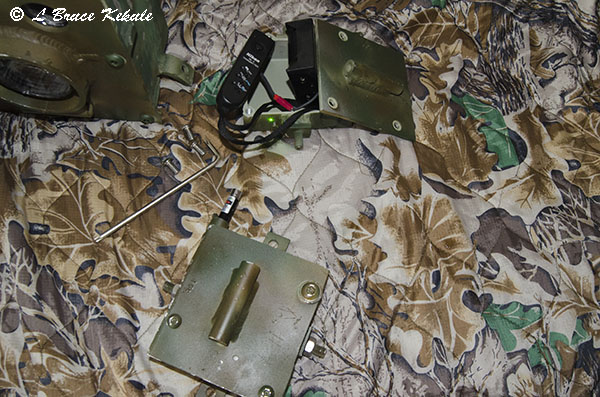
A Nikon ML-3 ‘Modulite Remote Control Set’ (active infrared) unit,
and a green laser pointer is used to line-up both transmitter and receiver.
Camouflage will be fake moss glued on with goop to the box, transmitter and flash units to resemble real moss that is growing all around. Leaves and bushes will be added after the units are bolted to the tree.
The biggest problem I see is excessive tripping from insects, birds and bats. I understand alcohol rubbed all over will keep the bugs and moths at bay. Salt and perspiration attracts these creatures and being active infrared, the unit will trip photos of an empty forest. Been there, done that.

Nikon SB-28 Speedlights with YONGNUO RF-603N wireless flash triggers
As soon as I get some shots, I’ll do a post. Look forward to some really neat stuff coming down my new trail captured by this full-frame D700. Hope this will influence others but the expense might be a bit over the top. I just happened to have one, that’s all…! Enjoy.
A ‘Trails End’ camera trap comes my way
A neat trail cam: Sony P41/Snapshotsniper SS board/Pelican 1040/2 AA externals by Trails End
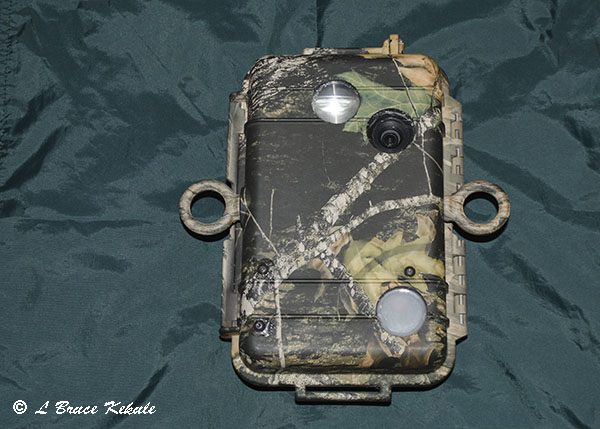
Last week, I visited my old buddy Suthad Sappu, a forest ranger in Kaeng Krachan National Park down in southwest Thailand along the border with Burma. We worked together along the Phetchaburi River deep in the interior of the park for some 10 years back during the 90s, and we got many tigers and leopards on camera trap plus loads of other cryptic creatures like elephant, tapir, gaur, bear (both species), fishing cat, banded palm civet, banded linsang and many more.

As we were chit chatting over dinner and drinks about our favorite subject, camera trapping, Suthad pulled out a very nice camera trap from his bag. It is a homebrew that was made up by ‘Trails End’ using a Sony P41/Snapshotsniper SS board/Pelican 1040/2 AA externals. It is very well built and looks new, and is unused. The case and eyebolts are dipped in a woodland type camouflage.

He says I can have it if I can get it working. Took me a few minutes with some fresh batteries and reset the date on the Sony. Flipped the toggle switch down and it fired up, and was working normally in a few minutes. I said thank you very much and smiled.
He has two more and I said I could get them going too. Does anybody know who ‘Trails End’ is and are they still in business? They certainly do very good work. I’ll be taking this cam along with a Bushnell Trophy Cam to India on April 3rd after tiger. The lodge I’m staying is reported to have leopards walking through the camp. Can’t wait to get there.
Some days are better than others….especially when a nice trail cam comes your way for free…!
Camera trapping a new wildlife trail and waterhole…!
Odd-toed ungulates and other fauna in Western Thailand
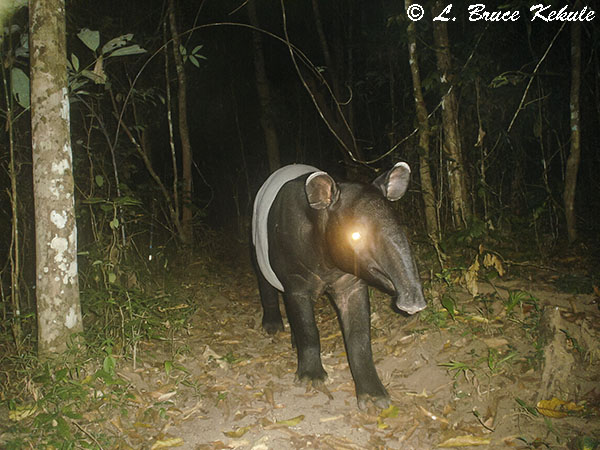
Some 40 million years ago, the tapir evolved and was found on many continents including North America. These creatures are now thriving in only two areas of the world: Southeast Asia has one species and South America three. The Asian tapir is the largest and have a very distinct two-tone black and white color pattern that acts like natural camouflage, especially at night where the black breaks up its outline. These odd-toed ungulates are now becoming quite rare due to poaching for their meat, and encroachment in tapir habitat.
A young tapir with a distinct ear marking on a wildlife trail
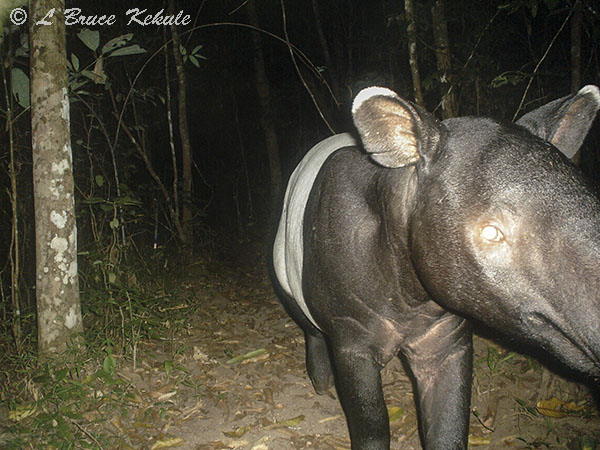

Another more mature tapir a week later
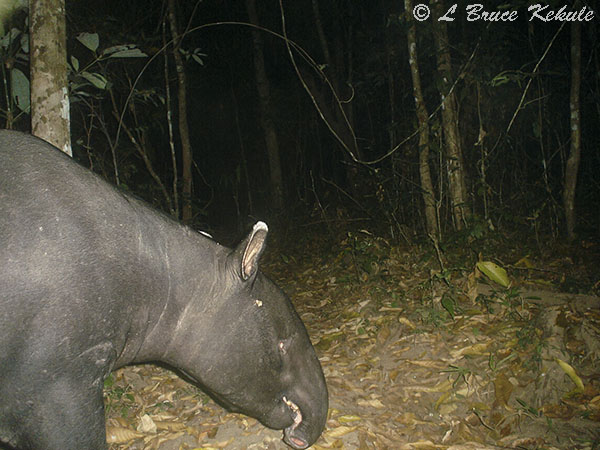
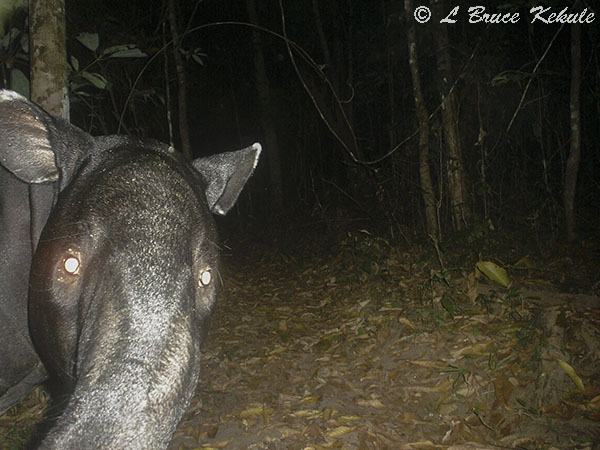

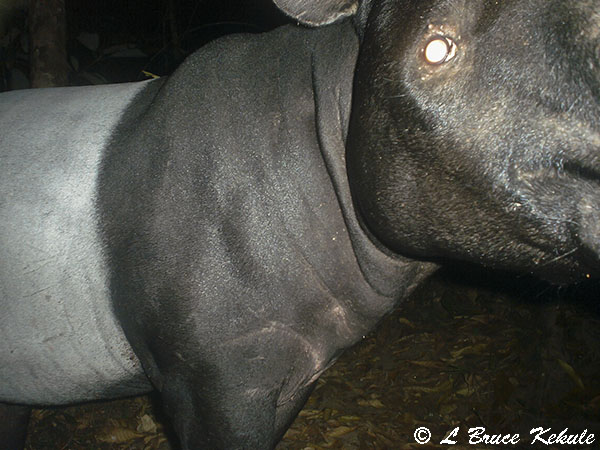
A female tapir at another cam
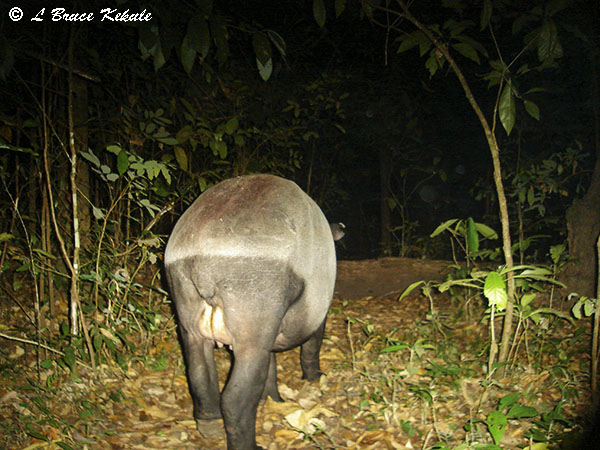
Other animals caught in this series include elephants, gaur, sambar stag and doe, wild pig, sun bear, porcupine and red jungle fowl.
Elephants pose for the cam


These creatures were camera trapped using three homebrew cams: a Sony P43/BFOutdoors/1040/C externals, a Sony S600/BFOutdoors/1040/C externals and a Sony S600/Yeticam/alloy box.
Gaur also came through
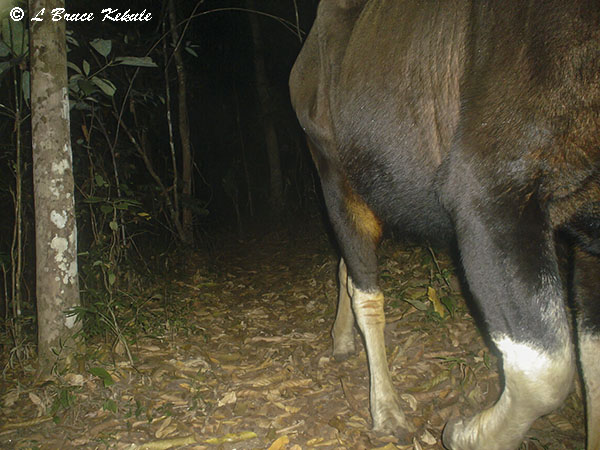

These cams were setup by a wildlife trail and a waterhole deep in the interior of Huai Kha Khaeng Wildlife Sanctuary and left for one month during January to February 2013.
Sambar stag and doe

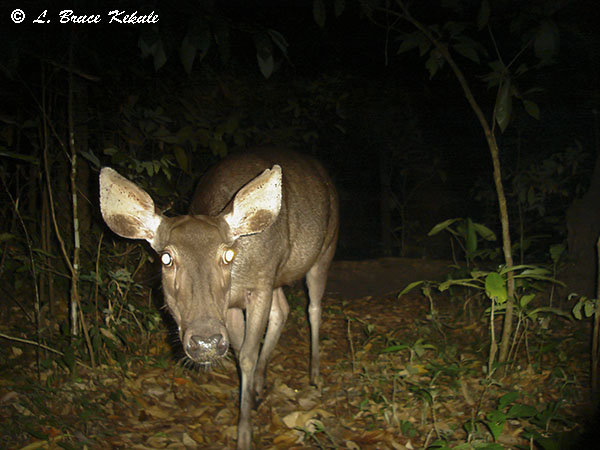

This place is simply amazing with Asian forest ecosystems thriving today that once almost completely covered most of Thailand. In one century, humans have overcome most of the country except for a few places.
Asiatic sun bear


Throughout the Kingdom, the once large tracts of forests are now sliced-up and wildlife has disappeared. Huai Kha Khaeng remains the shinning star of Thailand’s natural legacy going back to the dinosaurs and before…!
Sambar at a waterhole
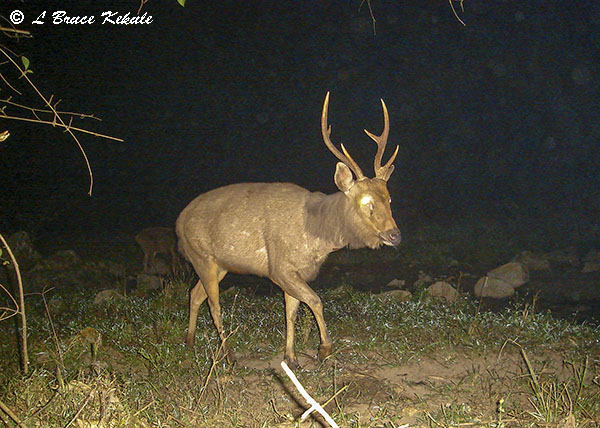


Porcupines

Red jungle fowl
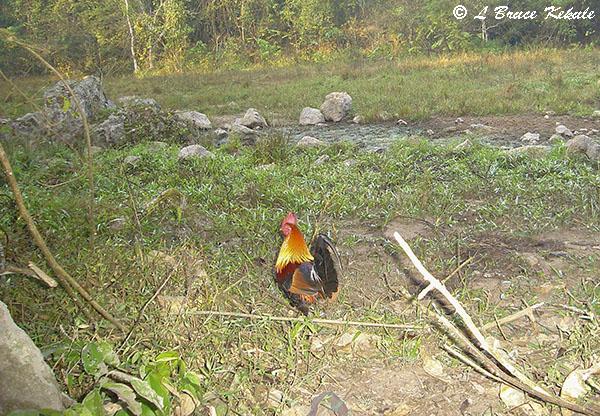
I now have setup my Canon 350D DSLR with three flashes on this trail. I’m hoping for some good shots with this rig and will be posting these sometime at the end of March.
‘Two ‘elephant-proof’ boxes
Custom made protective boxes for my Bushnell Trophy Cams

Finished boxes for my HD Bushnell Trophy Cams.
After using a couple commercial protective boxes with thin steel sheet metal and getting them bashed in by elephants, I thought it was about time to make-up some of my tough aluminum ‘elephant-proof ‘ boxes for my two 2012 HD Bushnell Trophy Cams. These are great little cams and I use mine exclusively on video as the HD clips are quite good but the photos only fair.

Tapping the 10mm threads.
First off, I got my welder to construct two boxes from 3mm thick plate aluminum and had him weld in some 1-1/2″ long aluminum octagon dowels in each corner. These would except 10mm ‘power torque’ machine screws. I machined the boxes flat and drilled and tapped the corners. The 6mm thick faceplate was installed and milled out for the sensor, lens and LEDs, plus a 10mm hole at the bottom for the mic.

Boring out the faceplate for the sensor.

Boring out the faceplate for the LEDs.

Milling out excess.
These boxes use two 3/8″ x 3″ stainless steel lag bolts from the inside for securing the box to the tree before putting the cam in and securing the faceplate. This alone keeps elephants at bay. The back is beefed-up with heavy duty plate and what I call ‘shark teeth’. A ‘Python’ locking cable is also installed for back-up.
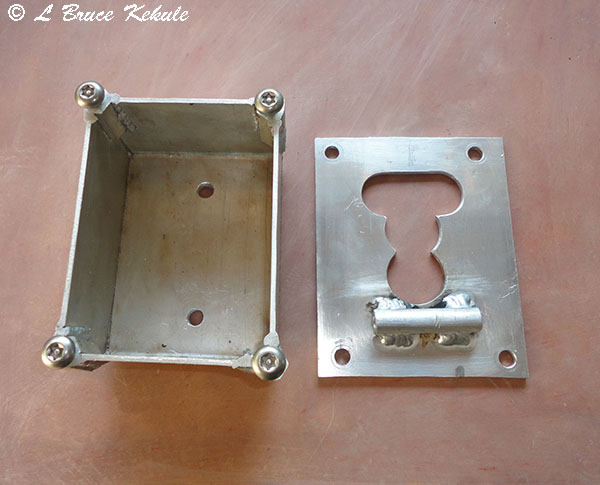
Finished box in the raw.
These boxes have stood the test of time….! All my cams use this system. The tremendous power of Asia’s largest land mammal is nothing to sneeze at. They can tear them off the tree if only a cable is used. My close friend and fellow wildlife photographer, Paul Whitehead has lost quite a few cams already over in the East using only cables.

Back-end showing beefed-up holes and ‘shark teeth’.
Needless to say, I’m confident when I leave my cams in ‘elephant country’ using this system. Tomorrow I leave for the forest to set-up these two Bushnell’s in a new location in Huai Kha Khaeng, Thailand’s premier tiger country. I am hopeful that loads of good video footage will be forthcoming. Hope this helps those with elephant or bear problems. A welding and machine shop is of course needed for this job…! Good luck.

Newly finished box next to an older one.
Africa Series: Sony S40 catches bat-eared fox
A camera trap’s final stint at a fox den in Amboseli National Park, southern Kenya

Bat-eared fox cub in its den
I took a Sony S40/Plano 1449/SSII/4 double AA externals to southern Kenya in December 2012 to be used in quick set-ups with minimum security (no Python locking cable) mainly to be used by the side of the road. The first location was Amboseli National Park near Mount Kilimanjaro where I captured a rare carnivore: a whole den of bat-eared foxes.

Bat-eared fox adult just outside its den
As me and my driver/guide Patrick Njoroge were on game drive, we noticed two adult foxes running away from their den that was about 10 feet from the road. I got some nice shots of the adults in great light. I decided to leave the cam overnight in some rocks near the ground as the site looked promising.

The other mature fox in the afternoon
While setting up the cam, I heard the pups in the den and one of them actually barked at me. I sat in the truck and waited, and in a few minutes a young one popped its head out shown in the lead photo. I had a great time shooting the little carnivore with my Nikon D3s/600mm.
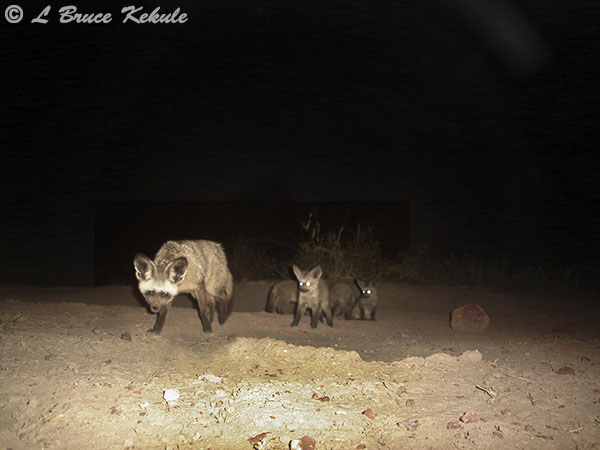
Fox family checking out the S40
We left shortly thereafter so as not to disturb them and let the home-brew do its work. That night, two adults and four cubs were caught by the S40. The next morning I was elated to see that this family was surviving in Amboseli. I downloaded everything from the card immediately. It’s a good thing I did too…!

Getting closer and not afraid of the flash
Later that day we moved to Tsavo West National Park situated east where I previously had set-up a Bushnell Trophy Cam at a waterhole deep in the park. With no cable, the S40 attached with tape was vulnerable but I thought who would steal a cam way out here. Boy, was that ever a big mistake. That night, a hyena came and took the S40, and the Bushnell recorded it all as seen on my previous post ‘Bad Hyena Night’.
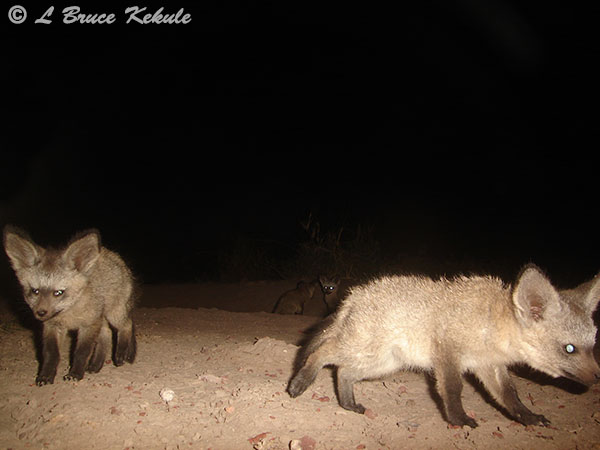
Even the cubs are not afraid
It’s hard to believe an African hyena would actually take my cam. Somehow, the creature must have been attracted to the salt residue left by my hands is the only explanation I have. The next morning on our way out, we looked around but could not find it. We left but I accepted the fact the S40 was gone but it had done a brilliant job of catching the foxes and that was that…!

My favorite S40 shot
I wonder where the S40 is now? Could it be down the hyenas den still tripping? Is it a chew-thing for the hyena cubs? I will never know.
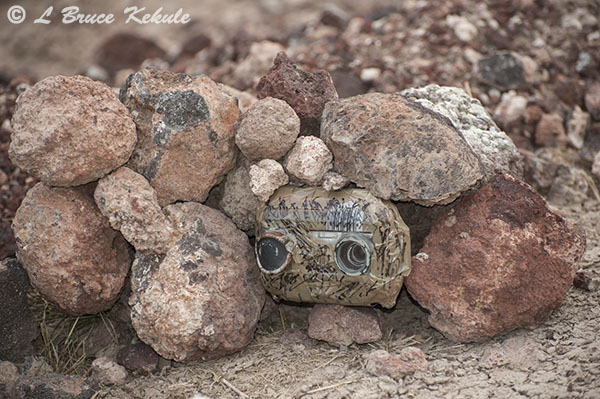
Sony S40 camera trap set in rocks by the road at bat-eared fox den
The moral of this story; whenever you can, always download your card or you could loose a lot….!
Enjoy.
Bad Hyena Night
This is what happens when you get lax….or was it just an oversight…? Needless to say, I lost my great little Sony S40 cam in a Plano 1449 and SSII with double AA externals to some tenacious hyenas. It was a great little cam and took good photos. And yes, it was the S40 hacked by Joe 12-Ringer I won in last year’s camera trap competition held by Camtrapper.com. I took this homebrew to Kenya as a quick-setup cam mainly to be used by the side of the road and hence, there was no ‘Python’ locking cable. Unfortunately, I also lost a whole bunch of photos that the cam took because I used some sticky tape to hold it in position above a Bushnell Trophy Cam. The rest is history.
PS: I do have two spare S40s with boxes and sensor boards that will be built some time in the near future. They are great little cams…!