

Posts Tagged ‘infrared camera-trapping’
Canon-Nikon ‘Hybrid’ DSLR trail cam
A 600D/T3i and a Nikon manual 50mm ƒ1.4 lens combination
I recently acquired a Canon 600D/T3i DSLR to be used as an HD video trail cam but with its present Canon programming, it will not stay on stand-by in video mode for more than 10-15 minutes and then shuts down, and must be restarted manually. The control circuits for the still camera and the video are separate. For the moment, to control the 600D in video mode as a trail cam, a remote triggering device or a hack to the video switch on the camera is needed and connected to a motion sensor.
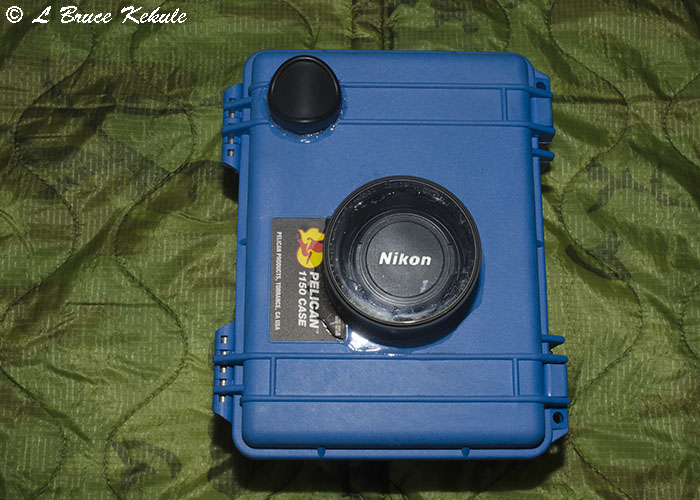 Canon-Nikon Hybrid trail cam.
Also, a sensor board with the right programming to turn the cam on, go into recording mode and take a video clip for 60 seconds and then shut the cam down for a delay (as short as possible). If there is still motion, start-up and a repeat of the video cycle will activate the cam again. I can hack an IR remote or the video switch on the Canon to accomplish this task for now. More battery power for the cam will probably be needed and will be doing some serious testing real soon. On the video remote option, and since it is IR controlled, it would have to be in front (line of sight) or next to the sensor inside the case.
 Canon-Nikon ‘Hybrid’ SSII Pelican 1150.
However, there is a ‘Magic Lantern’ firmware program for the Canon to control it with a shutter release cable but I’m not sure at the moment. That seems to be in the field of programming, something I don’t do. I’ll leave that to the pros but will be looking into the ‘Magic Lantern’ program at a later date. For now, I will be setting this cam to shoot stills and hopefully test it in video soon.
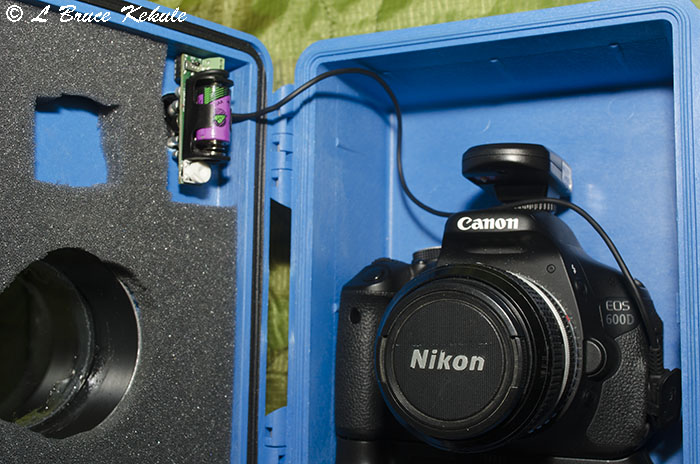 Hybrid close-up.
The Nikon lens is a very old manual 50 ƒ1.4 I’ve had for ages back in the days when only glass and metal were used for lens materials, and clarity and sharpness is superb plus it’s very robust. A converter was bought to allow the Nikon to fit on the Canon. I’m now using manual Nikon lenses except for a Canon 400D and Nikon D90 with their newer 50mm glass/plastic lenses. I love the old prime manual lenses from Nikon.
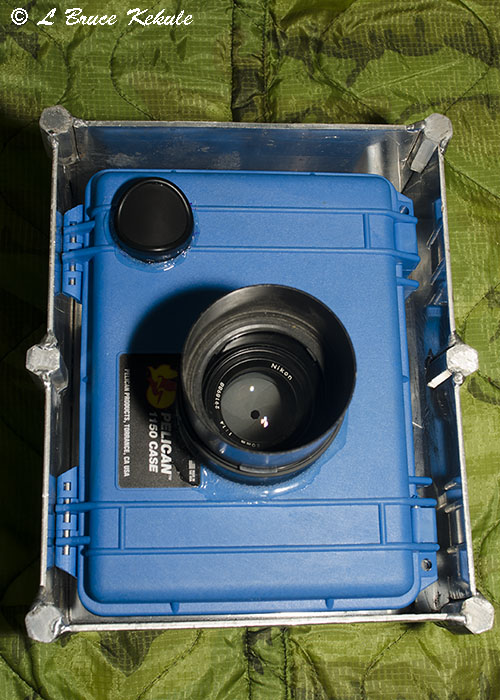 Hybrid in aluminum ‘elephant proof’ box.
The 600D fits easily in a Pelican 1150 using a 77mm diameter aluminum tube snorkel and a 77mm UV filter for the lens, and a Snapshot Sniper SSII #5 board/HPWA connected by a Canon shutter release cable (shortened) with a 90-degree plug. The cam is set to ‘continuous mode’ and fires off 6 or more shots on each trigger. It is very fast…!
 Nikon SB-600 with PT-04NE FM radio transmitter.
A PT-04NE FM radio transmitter is used on the Canon and two receivers trip Nikon SB-600 and a SB-800 housed in ‘tupperware’ type plastic boxes with 4-locks on the lid and will be airtight. I will also have another spare flash (a generic ‘Speedlight’ 850/Canon flash mount) with a PT-04 receiver in a slightly larger plastic box. I got this idea from Cutter on the ‘Outdoor Talk’ forum that used them for externals and many thanks to him for a great idea. I will certainly be using these boxes for all my future slave flashes and some external battery builds.
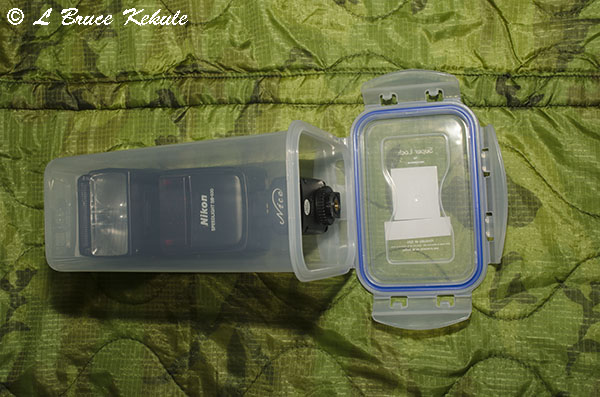 Nikon SB-600 with PT-04NE FM radio transmitter in a ‘tupperware’ box.
Another sensor to be used with this cam will be an old ‘TrailMaster’ TM1500 ‘active infrared’ unit housed in two separate aluminum boxes to be securely attached to trees between a trail or over a log for precise tripping. The only drawback is the loose wire between the receiver and cam…! However, I will be using special aluminum braided telephone cable to connect the two as rodents and other small creatures could chew/gnaw on the wire. It will also have to be secured to the tree using clips and lag screws, and then buried in the dirt.
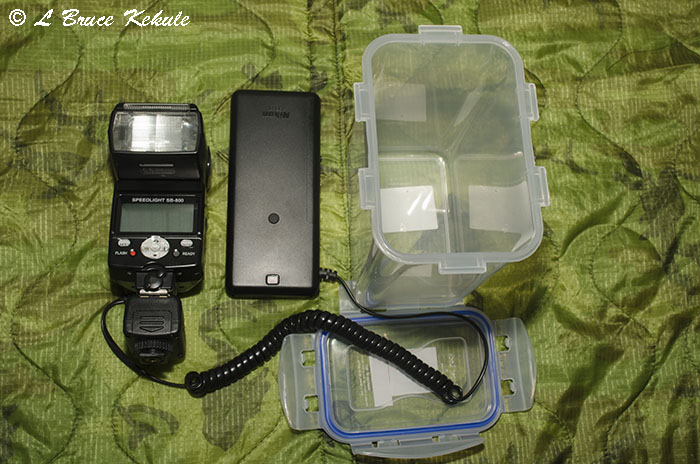 Nikon SB-800 with Nikon SD-8 battery pack and PT-04NE FM radio transmitter.
As usual, the cam and three-four flashes are housed in my aluminum ‘elephant proof’ boxes that are bolted to trees in conjunction with ‘Python’ lock cables. Due to time restraints and a cracked molar, I did not get the boxes done in time for this post but they will be finished soon. Anyway, that’s the way these very strong boxes look from the welder. The ‘TrailMaster’ units are also shown in unfinished boxes. When they are all done, I will post some photos later.
 A TrailMaster TM-1500 ‘active infrared’ unit in unfinished boxes.
The cam will be set to manual focus and exposure: ƒ8 – 1/125 @ ISO 400 to test the Canon/Nikon combo and depending on how the photos come out, can increase ISO. Look forward to setting this cam not far from the ‘Big Cat Trailhead’ with images and videos to follow…!
As there is loads of space in the 1150, I’ll be able to add various items needed for video including another sensor with a sister board to get white light for the video at night. I’m certain a large battery with loads of power will be needed close by…I’ll be addressing these issues as I go forward with this project.

The hack to the camera to operate video only is as follows. It is a difficult modification but is doable. Only two wires – positive and negative is needed. I’m waiting for a chip for my board with the right programming.
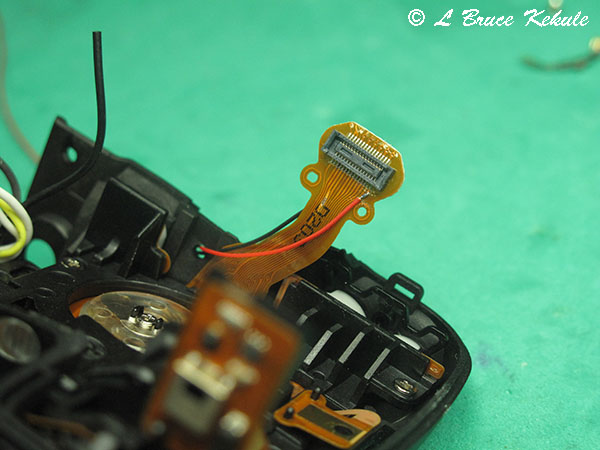
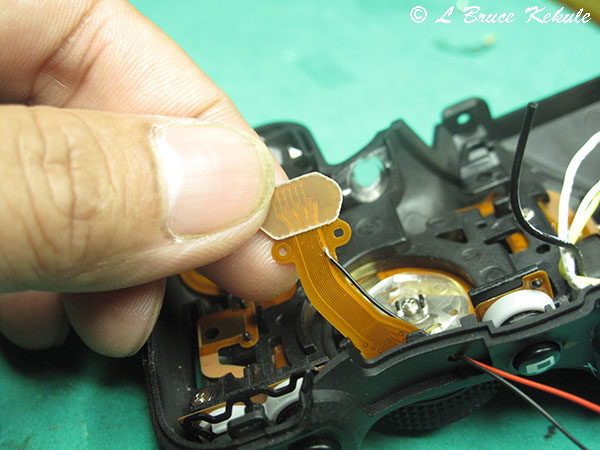
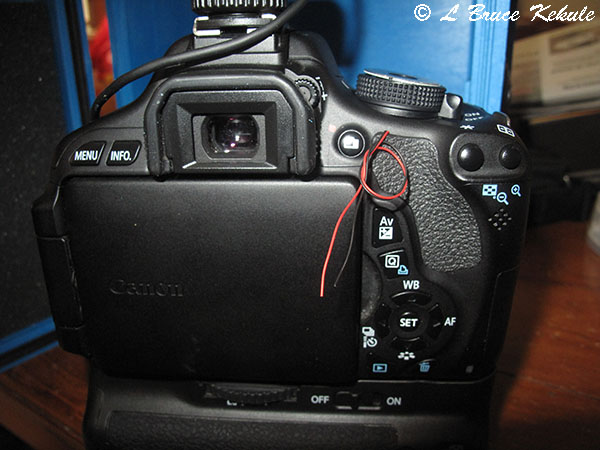

Canon 400D DSLR catches a ‘black leopard’
Once again, the ‘Big Cat Trailhead’ situated deep in the Western Forest Complex continues to be a real hotspot for the big cats. Both black and yellow phase leopards were captured on digital stills and video at this location.

In July at the beginning of the rainy season, I set my Canon 400D down low (about two feet off the ground) on a tree at the trailhead wanting a real low-down set-up. When I returned, the lens was completely covered by sand and mud from extremely heavy rain and splatter…and no photos were on the card: a disappointment…! I then moved the cam way up about five foot and angled down about 45 degrees.
After some three weeks, I was back and a black leopard had passed the cam at night. Only one flash went off (a Nikon SB-28) and just one good shot was acquired. A bunch more were captured of the cat but it was standing half-out of the frame. The Canon flashes (270EX) have proven to not be very reliable and I will probably just drop them out eventually. The Nikon flashes (especially the SB-28s) are better and last longer on stand-by.
Even though the composition is not the greatest, it’s still a good record shot…I have since moved the cam back down to about three feet hopefully to catch a full-frame head-on shot of this melinestic creature. I have now caught this cat 5-6 times including a beautiful daytime video as the black cat passes by and another IR video showing its spots…I will be posting these vids soon.. Enjoy..!
Nikon D700 trail cam set
Creatures on the log: A giant rodent, a pitta and an eagle
Not much passed over the dead tree last month but I did get a few interesting creatures that stopped by. The Nikon D700/35mm lens/ML-3/Pelican 1150 with three Nikon SB-28s worked very well. An Asiatic porcupine crossed over, and a blue-winged pitta and then a changeable hawk-eagle with prey landed on the log. Due to the 35mm lens, it seems a bit wide with the full-frame sensor and had to crop these images. I will be putting a 50mm when I get back to the unit next month…in the meantime, the cam is working very well and looking forward to those big cats with stripes and spots….!

Porcupine
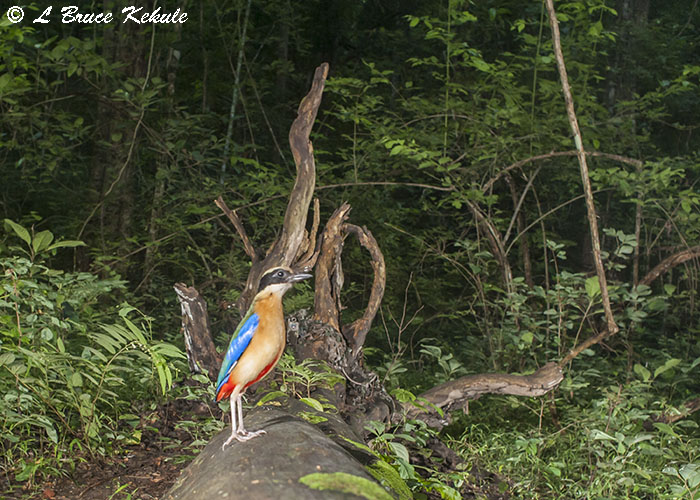
Blue-winged pitta

Changeable hawk-eagle with prey (feathers already plucked)

Changeable hawk-eagle’s departure
TIGER AND BANTENG – Sony W30 set
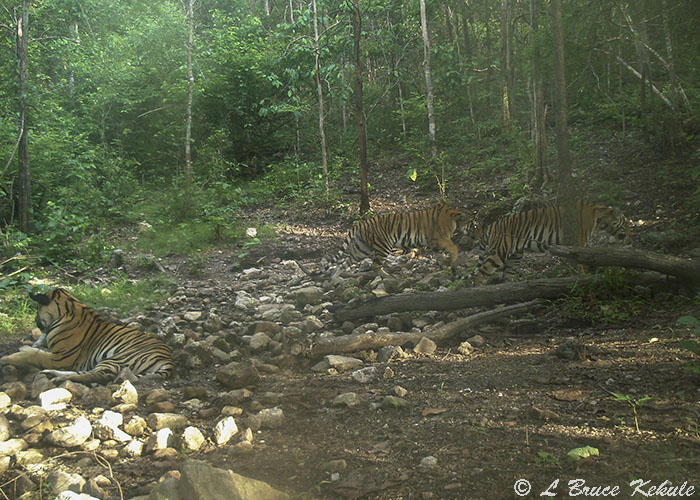
Tiger mother and two full grown cubs.
Recently, I pulled a Sony W30 camera trap from a mineral deposit in the Western Forest Complex and found some amazing photos of a mother tiger and her two cubs. It is very rare to see a tiger family on a trail cam. These amazing creatures usually do not hang around when it starts flashing at them…but I got some great shots shown here.

Mother and cub.
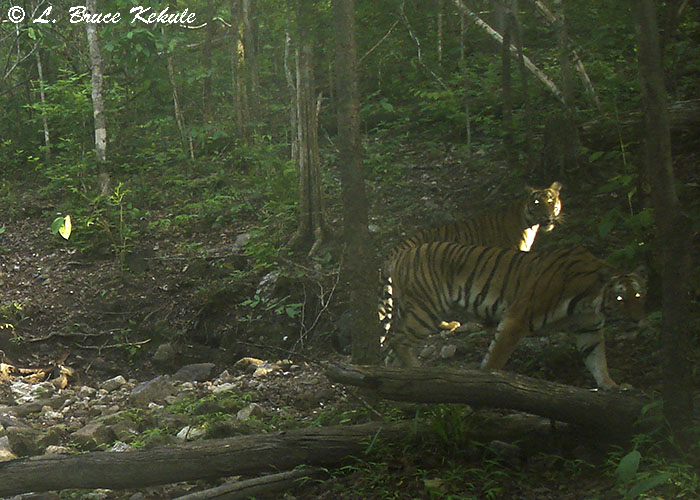
The two cubs leaving the mineral deposit.

Mother on the way out.
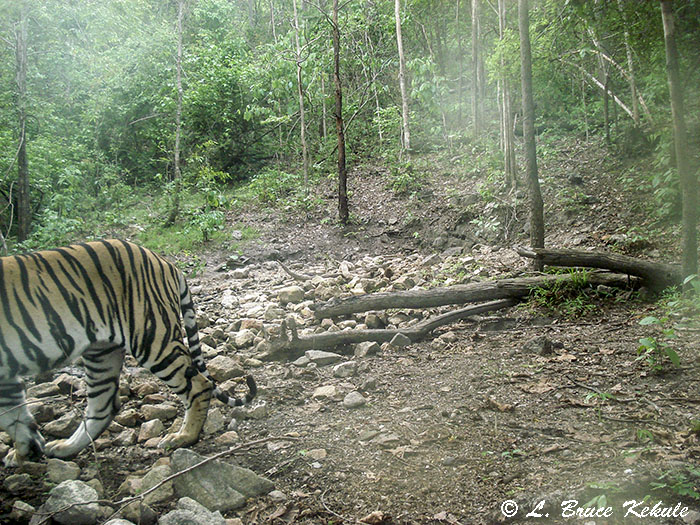
Another tiger visits the camera.
Banteng have now become quite rare in Southeast Asia but thrive in two wildlife sanctuaries in Thailand; one in the east and one in the west. Here are some shots of these beautiful wild cattle. The old bull looks like he is having a heck of time with the moths.
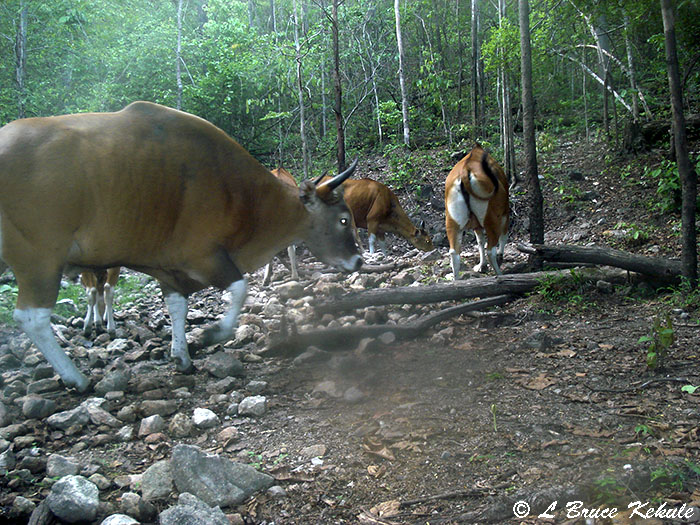
Banteng herd at the mineral deposit.


Old banteng bull and moths after a big rain.
A Canon 400D trail cam
A new/old Canon 400D: An easy DSLR in cost and production

Canon 400D with battery grip/Pelican 1150/Snapshot Sniper SSII board/Yongnuo wireless flash trigger plus two ‘D’ cell externals.
Back in march 2012, I built and posted my first DSLR trail cam around a Canon 400D with 18-55mm kit-lens and a Yeticam board (EOS chip) in an old recycled aluminum box I had made up for Minolta 800 si SLR film camera years ago.
I was using Yongnuo wireless flash triggers tripping three Canon 270EX flashes and it was working OK when I left it. Elephants bashed the thin-tube aluminum snorkel breaking the front glass, and then it rained. And that was that…!
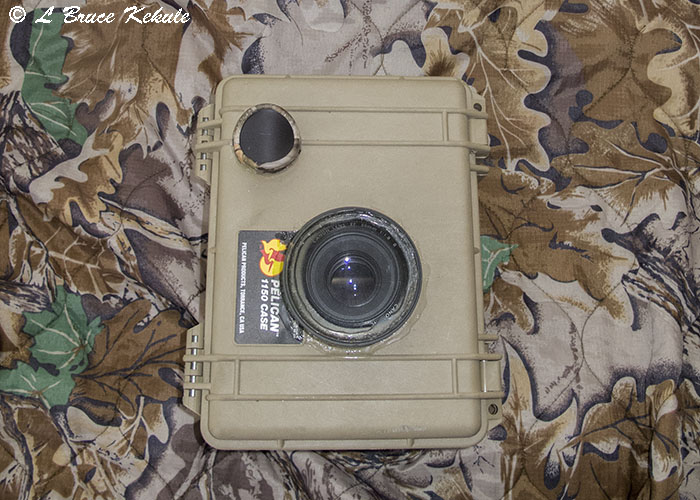
Canon 400D in the box.
I then picked up a Canon 350D with the 18-55 kit-lens and got another Yeti board rebuilding the cam. The snorkel was busted again by the forest giants but it did not rain this time and I was able to get it going again with a new replacement glass (77mm UV filter) and an ‘elephant proof’ snorkel protector. This cam is presently working very close to where I camera trapped and was charged by a bull guar.
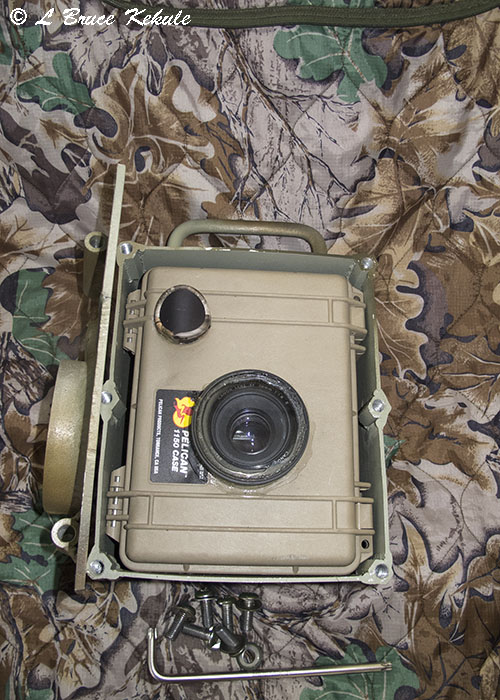
The 400D in an ‘elephant proof’ box.
I decided to buy a second-hand Canon 400D (Rebel XT-i) body only but this time went with a fixed Canon 50mm ƒ1.8 lens. I picked up a Pelican 1150 box and one of Snapshot Sniper SSII #5 boards and hooked it up with a Canon shutter release (button removed and it has a good 90-degree plug). A 77mm aluminum tube and filter is glued to the case with Goop. A Snapshot Sniper HPWA with a black Fresnel is used with the sniper board.

Canon 400D ready for the field.
The shutter release shielded wire is ground and white is shutter and red is power. The camera is set to ‘Continuous’ and the board to trail mode. I’m getting 5-6 frames per trip and can trip as many as four-five flashes at once. I have several different locations planned for this cam. With a Yongnuo 603C wireless flash trigger with two ‘D’ cell externals and everything fits nicely in the 1150.

Flashes to be used with the Canon 400D.
I have two recycled flashes (a Canon 270EX and a Nikon SB-28) that will make up the group. Another two Nikon SB-26s on ‘stand-by’ mode will also be put into service (one with four ‘C’ cells and one with four ‘D’ cells) to see how long the respective batteries will last. A special modification is made to the SB-26s to allow regular 6-volt 4-cell packs to be used. Another mod is to unhook the ribbon to the monitor after the flash has been set-up (mostly half-power). This will reduce power consumption on the SB-26s.
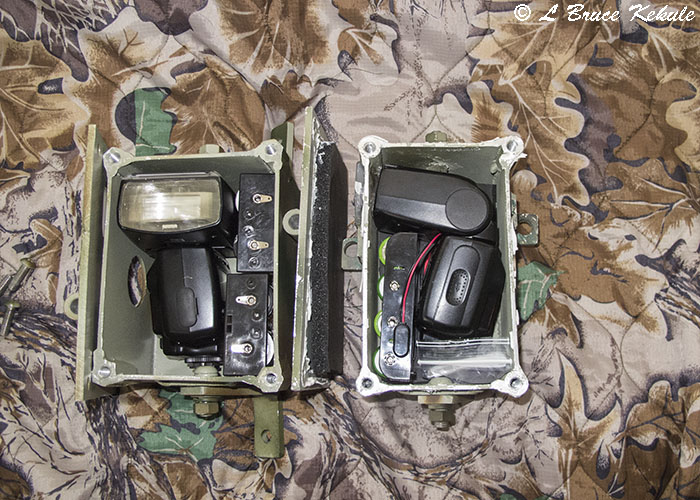
Nikon SB-26s: one with four ‘C’ cells and one with four ‘D’ cells.
The Canon 400D (300, 350 or 450Ds) are not that big or expensive. There is plenty of room for a pipe through and Python locking cable. It will shoot in ‘Raw’ mode that will allow some latitude in post-processing.
As usual, I have made up an elephant proof aluminum box that will be bolted to a tree with three 3”x 3/8” stainless lag bolts from inside the box plus two 10mm Python cables. The front cover is bolted to the box using six 10mm power-torque machine screws. The flashes are in aluminum boxes with 8mm power-torque machine screws bolted to trees with the same lag bolts and Python locking cables for security.

A Canon 400D with an adapter for Nikon 50mm ƒ1.4 lens.
I have another 400D that will be getting the same treatment except I have an adapter to use an old Nikon 50 ƒ1.4 manual lens. We will see what the difference is in using a plastic lens versus a glass lens. I’ll put my money on the glass out-preforming the plastic…!!
Cost of materials – cost can vary:
Canon 400D………………………………………………….. about $150 (used)
Battery pack grip……………………………………………… about $32 (new)
Canon fixed lens 50ƒ1.8 ……………………………… about $80-90 (used)
Canon Shutter release……………………………………………….. $13 (used)
Pelican 1150 case……………..……………………………………….. $30 (new)
Yonguo 603c flash triggers (a pair)……………………………… $33 (new)
Snapshot Sniper SSII board (#5 chip) & HPWA Fresnel.. $50 (new)
Total cost: about $398 plus labor and essentials (Goop, extra cam battery, drill bits, soldering tools, etc).
Hope this will give some of you camera trappers out there an incentive to build a DSLR…! The cost for some cams is not that expensive and the Canon 400D is a good choice for a first cam.
A Close Encounter: The saga of a charging bull gaur
Gaur: Thailand’s magnificent mega-fauna
A truly close call with the largest bovid in the world…!

A bull gaur camera trapped at the trail-head a week before about 100 meters from where I was charged. Probably the same old bull that tried to kill me…!!
About two weeks ago, I hit the jackpot out of all my 48 years in Thai forests. I was alone and it was raining in the Western Forest Complex. I had just set a Bushnell Trophy Cam set to video at a trail-head where I previously got a big bull gaur, a bull banteng, elephant, black leopard, wild dog, tapir, wild pig and barking deer.
As I was walking in to set a few more traps, I saw some fresh gaur tracks and judging from the size, noted it was a big mature bull. I went in a little bit more and decided to turn back as the bush was really thick and it was getting late.

A mature bull banteng on the trail.
I had gone about 50 meters and all of a sudden, a bull gaur no more than six meters away, snorted at me. I snorted back thinking he would run away. In the next moment, this huge beast punched through the bush with its head down in the classic position to hook bad people and throw me into the trees.
I saw the right horn base for a fraction of a second and it took me another fraction of a second to do the only thing possible and that was to drop down to the left flat on my stomach with my head down. The bull jumped over my legs and then circled around to do more business of trying to kill me.
What seemed like a lifetime, I heard him thrashing around breaking saplings and stamping on the ground some 10 to 15 meters away. A second charge was imminent and could be disastrous if he used his hooves to trample me. Only one thing would save me now.

Banteng bull close-up.
I quickly pulled out my pistol (.45-ACP ‘Para-Ordnance’ alloy frame), loaded it and let off a shot in the air all the while still lying down. After the report a few seconds later, the bull high-tailed it crashing off into the forest behind me. WOW, that was a close encounter and truly a heart-stopper. I stayed on the ground for quite awhile to make sure he was really gone.
In all my years in the forest, I have never been this close to a gaur or had the experience of a charging bull. No telling if this old bovid had been shot and wounded previously by poachers, and that he really hated humans. Or was he just an old guy with a bad temper and considered me a threat when I barked back at him. I will never really know how close I came to instant death…!
Many a Thai hunter has been killed by gaur because they froze in their tracks and just stood there not reacting in time. I have read in several books that the only way to avert death is to drop flat on all fours with your head down, or to have a very large caliber rifle (minimum .458 caliber) on ready. I had a Nikon D7000 and a 70-300 VR lens. I was lucky to be packing a sidearm..!!

A black leopard close-up.
How did I react so fast and survive? I have one man to thank. He is my dear old friend Gordon Young, author of the book ‘Tracks of an Intruder’, a classic tome about hunting in northern Thailand in the 1950s. He talks about the evasive action needed in this urgent situation in a chapter about a man-killer bull gaur in Mae Salak in Chiang Mai, Northern Thailand. I certainly thought of him right after this…!
I feel extremely lucky to have survived this attack and it was absolutely the most exciting experience that I have ever had, bar none! I have been two meters away from a black leopard just outside my blind, and that did not even hold a candle to this charging solitary bull. I certainly did not have time to take a photo.
Maybe being born under the star ‘Taurus’ (May 19th) had something to do with it, or maybe the ‘good old spirits’ of the Thai forests took care of me and pushed me down at the right moment. This incident surely has me thanking my lucky star.
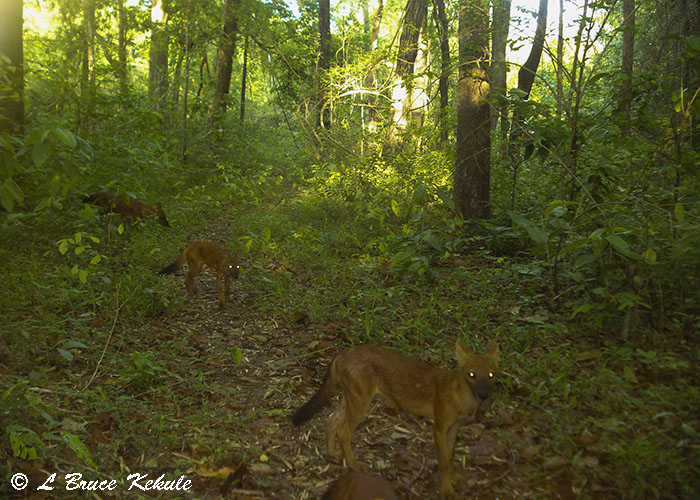
Asian wild dog pack out hunting.
Gaur are wild forest ox and the largest bovid in the world standing 1.7 meters at the shoulder weighing close to a ton for mature bulls with a distinctive dorsal ridge and a large dewlap, forming a very powerful appearance. Cows are only about 10cm shorter in height, but are more lightly built and weigh 150 kilograms less.
These beasts have stout limbs with white or yellow stockings from the knee to the hoof. The tail is long and the tip is tufted to ward-off biting insects. Newborns are a light golden color, but soon darken to coffee or reddish brown. Old bulls and cows are jet black but south of the Istamas of Kra, some take on a reddish hue.
All bovine share common features, such as strong defensive horns that never shed on males and females, as well as teeth and four-chambered stomachs adapted to chewing and digesting grass. Their long legs and two-toed feet are designed for fast running and agile leaping to escape predators. They are gregarious animals, staying in herds of six to 20, or more. A large herd of 50 was recorded in Thung Yai Naresuan Wildlife Sanctuary but that was a long time ago.
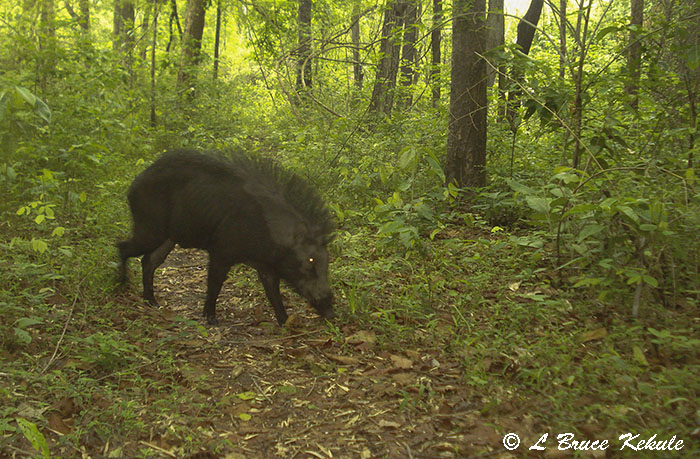
Wild boar in the morning.
Due to their formidable size and power, gaur has few natural enemies. Tiger, leopard and Asian wild dog packs occasionally attack unguarded calves or unhealthy animals, but only the tiger has been reported to kill a full-grown adult. Man is their most dangerous adversary.
These herbivores graze on grass but also browse edible shrubs, leaves and fallen fruit, and usually feed through the night. They also visit mineral licks to supplement their diet. During the day, they rest-up in deep shade.

A male muntjac (barking deer) with a serious wound on its hind quarter.
Gaur still survive in some protected areas but are in serious decline. It is now estimated that maybe 1000 remain in Thailand. However, some reserves where gaur are breeding in fairly good numbers allowing them to actually increase in number if there is adequate protection.
These enormous beasts live in herds but also become solitary, primarily the males. But I have also seen and photographed several mature females by themselves. Mineral deposits play a very important role in the lives of these wild cattle as does thick forests and steep mountainous terrain with abundant water resources. Their future depends whether they are protected to the fullest extent. Unfortunately, their beautifully curved horns are highly sought after by poachers and people who covet trophies.

A unarmed researcher a day before the big gaur passed by.
Budgets, better funding, more rangers and personnel are needed now. Transparency is a must with the national parks and wildlife sanctuaries so money is used properly and efficiently, and corruption stamped out completely. Now that will be a tough nut to crack. It is hoped this draconian situation will change, so the Kingdom’s natural heritage and the majestic gaur will continue to survive in today’s world.
Additional photos of gaur:
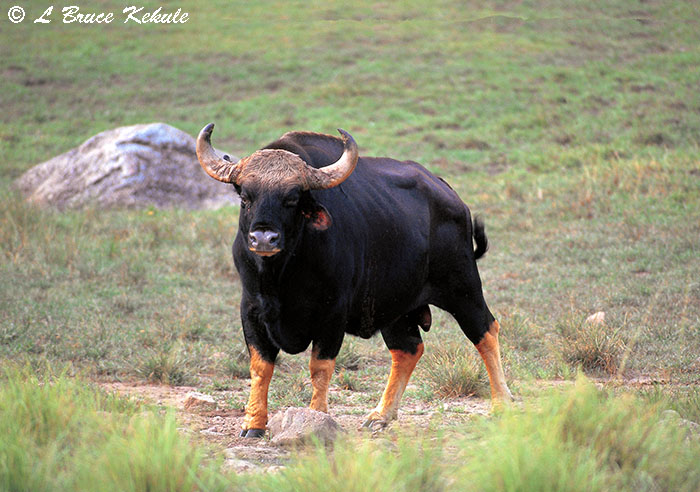
My first encounter with a bull gaur some 15 years ago.

The older bull being chased by a younger one.
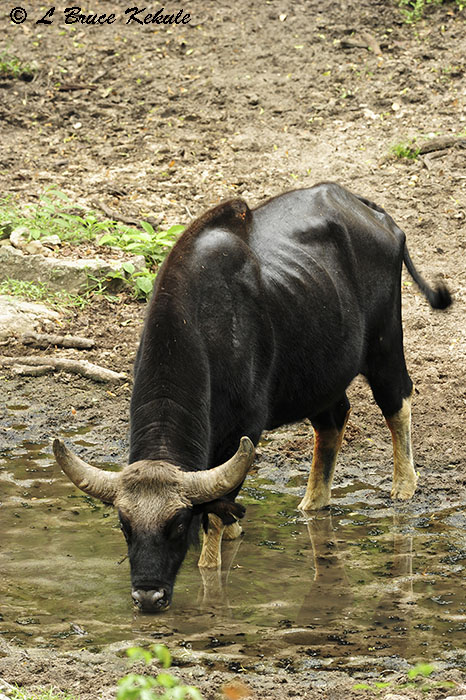
Another old bull gaur at a waterhole.

A single gaur cow at a mineral deposit.

Gaur herd including a bull, cows and three calves.

A gaur herd including two banteng in Kui Buri National Park.

A bull gaur track on the right and cow track above.
A Black Leopard passes my camera trap
A series of images captured with a Sony S600 camera trap

A black leopard in mid-afternoon on a trail to a hotspring in Huai Kha Khaeng (cropped).
It is now late April in the forest of Huai Kha Khaeng Wildlife Sanctuary, my favorite-place in Thailand. The first rains have come and doused the dangerous forest fires that spread through the sanctuary during the dry hot season starting in March.
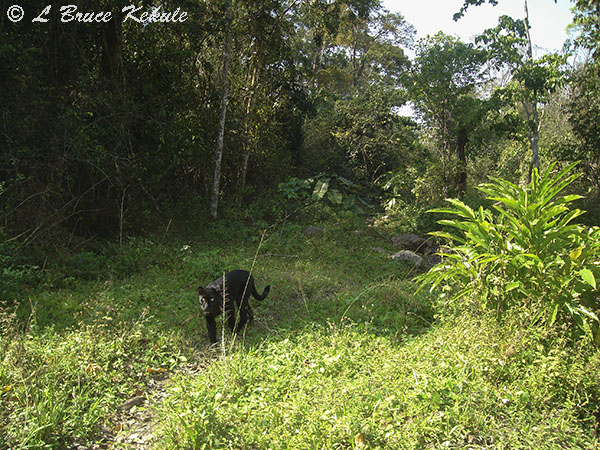
Full frame shot of the leopard.
As usual, I’m setting-up camera traps at various mineral deposits (natural seeps) around a ranger station deep in the interior accessible only by a dirt road. These waterholes are visited by all the large mammals including tiger and leopard, and provide excellent opportunities for some great animal shots.
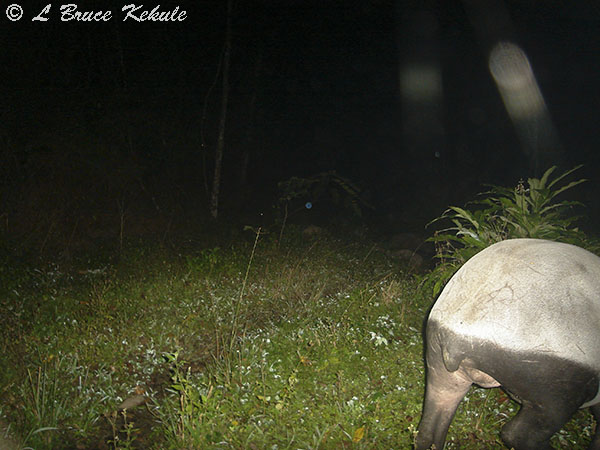
An Asian tapir passes by.
As I was going through a few of my old camera traps changing out cards and batteries, I decided to have a quick look at a 2GB card that was in my Sony S600/SSI/1020, one of my first cams using a Pelican box.

A young ‘tusker’ on the trail showing off.
Imagine my surprise to see a shot of a ‘black leopard’ in mid-afternoon walking on the trail. Other denizens caught include elephant, tapir, sambar, wild pig and muntjac (barking deer) over a month period back in February to early March of this year. The cam recorded some 400 images mostly elephants and sambar. It truly was a bonus and I actually closed out the program with this cam.
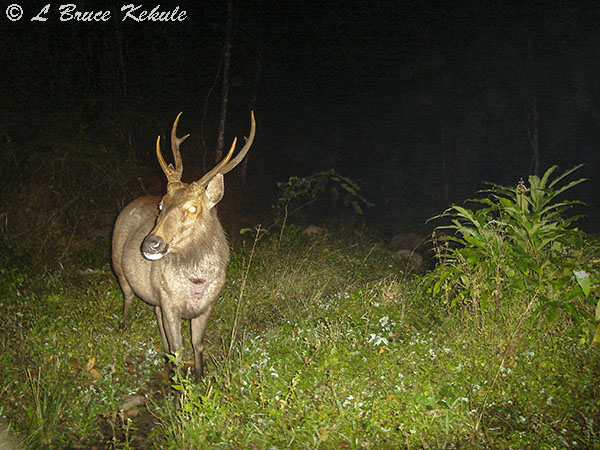
Sambar stag on the trail.
I actually forgot to download the card and if I had formatted it, only a recovery program could have got them back as long as I had not filled the card with other images. Been there done that…!

Another sambar stag checking out my cam.
The black leopard brought back fond memories of this place more than 15 years ago. I was sitting in a tree blind up by the hot springs when a black leopard walked in about 4pm and posed for me at several places for over an hour.
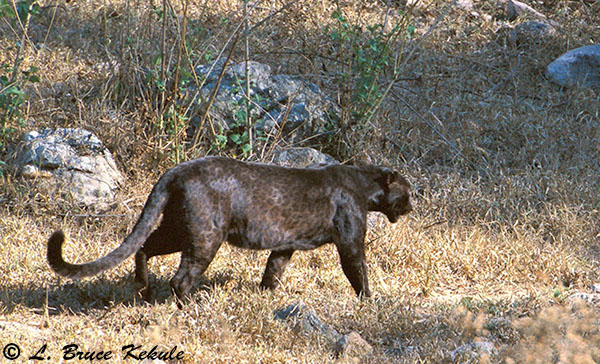
My first black leopard in the late afternoon sun showing its spots.
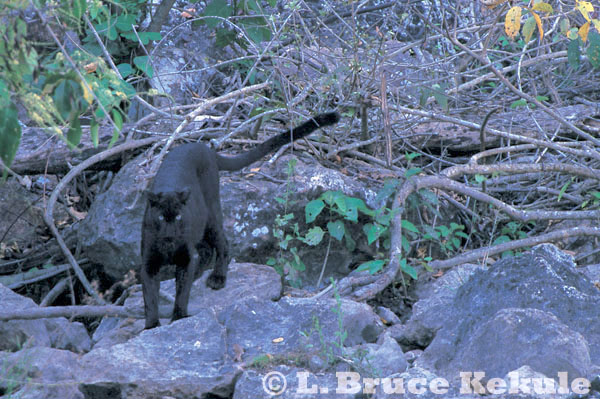
The mature cat up at the hot springs.

My leopard posing on a fallen tree.
These were in the old days of slide film, and I did not know how good the shots were until the film was processed. Here are a few images from that lucky sequence many years ago.
The morel of this story: Make sure you double-check and download all your cards before formatting, or you may loose some valuable images like I almost did…!
Some other images from this set:
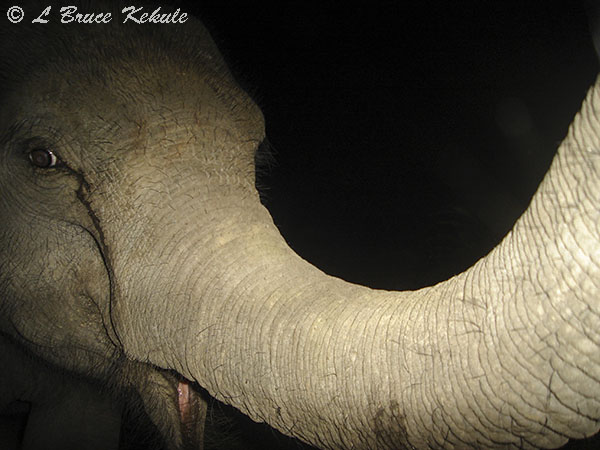
A very young elephant checking out the cam.

Looks like the bigger elephant lost part of its tail.
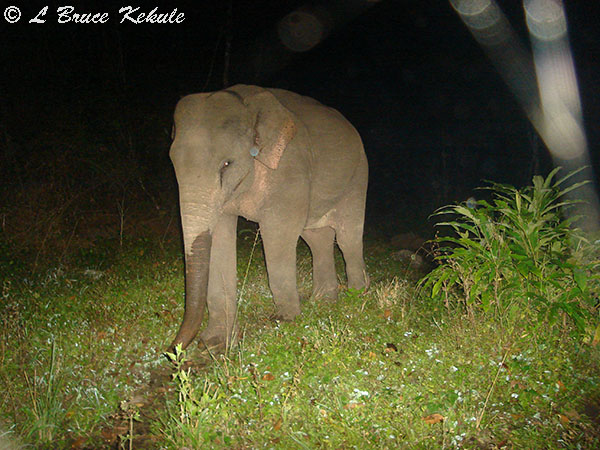
A youngish elephant on the trail.
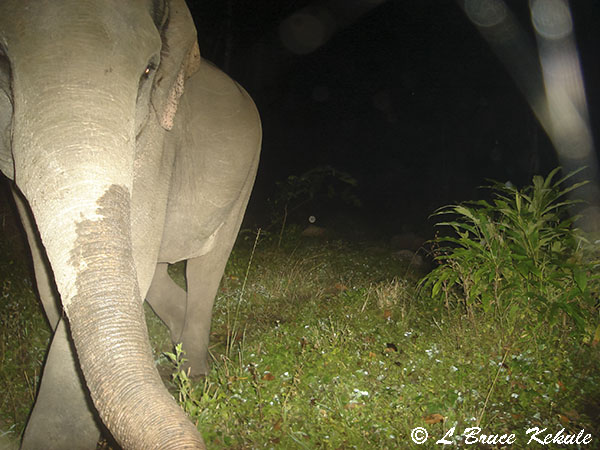
Same elephant checking out the cam.

A sambar stag feeding on grass.
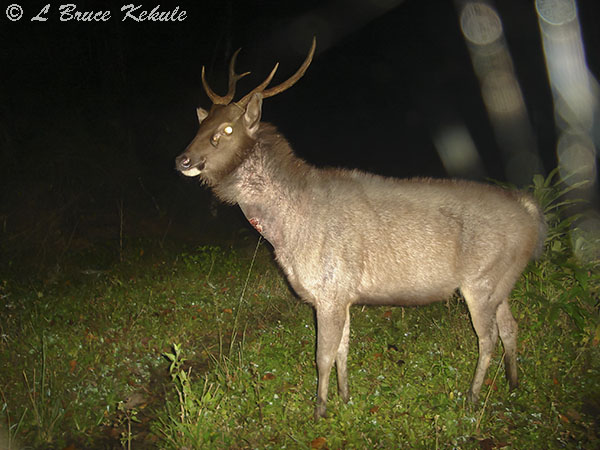
A mature sambar stag.

A young sambar stag.
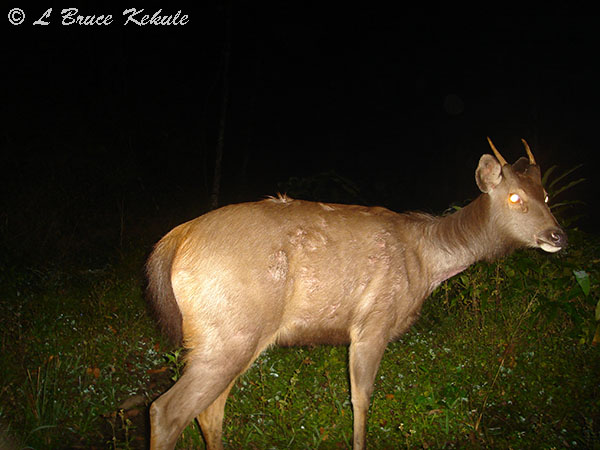
Another spike stag with blotches.

And yet another spike stag.
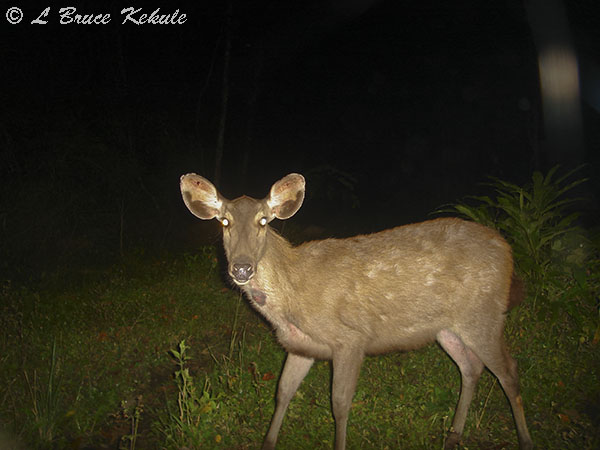
A sambar doe.
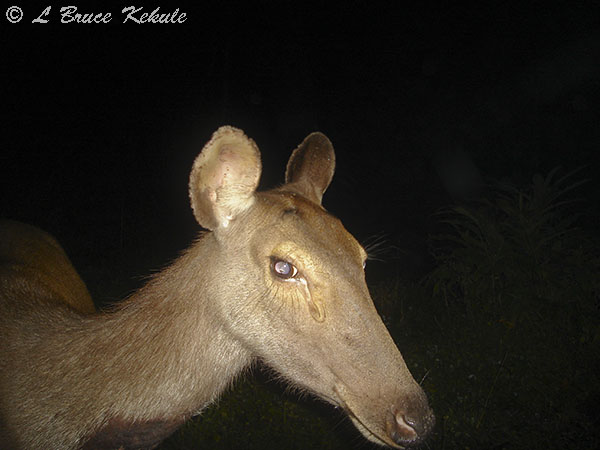
Sambar doe close-up.

A wild pig in the late afternoon.

A muntjac (barking deer) early in the morning.

The ‘tiger hunter’ after setting the cam.
Got an ‘Indochinese tiger’ with my DSLR Canon 350D trail cam

Indochinese tiger in Huai Kha Khaeng
Last year in March 2012, I did a post on a DSLR Canon 400D with three wireless Canon 270 flashes (http://camtrapper.com/viewtopic.php?f=5&t=5369). After months of failure, wrong settings and bad luck, I was at wit’s end. I set the cam in the forest but it would only work for a day or two and go dead. After consultations with TRLcam, I finally got the settings right. Then an elephant bashed in the snorkel and rainwater destroyed the cam, board and flash trigger. It was a mess and that Canon is now in my camera graveyard…!


Elephants on the trail
Fortunately, I had another Canon, a 350D that was working well with a Yeticam board with an EOS chip I got from Mark at Yeticam.com. As both cameras are about the same size, the slightly smaller one fits perfectly in the aluminum box with a Canon 18-55mm lens. All new components were replaced and I finally set the cam on my ‘new trail’ on Feb.3 and got back to it on March 31st.

Gaur bull
Imagine my surprise when I viewed the files and saw a tiger had passed and two flashes worked. I also got elephant, gaur and black bear but not before an elephant bashed the snorkel again. Fortunately, it did not rain this time and the cam and components are fine. Amazingly, the cam took some 500 images but most are black because of no flash power that had run out about two weeks into the stint.
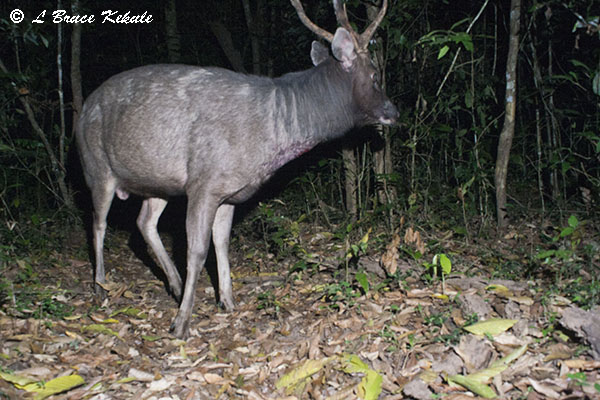
Sambar stag
It’s back to the drawing board on the snorkel and increased battery packs (2 ‘C’ or ‘D’ cells) for the flashes. Due to the extremely dry season and forest fire, I have just pulled all my cams until the first rains arrive.
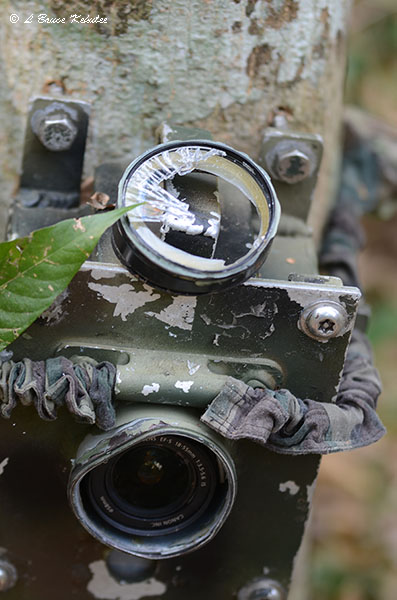
Busted camera damaged by elephants
I agree with TRLcam and a few others that a new forum should be set-up for DSLR camera traps as they are truly in a class of their own. Enjoy.

DSLR Canon 350D set-up
A ‘Trails End’ camera trap comes my way
A neat trail cam: Sony P41/Snapshotsniper SS board/Pelican 1040/2 AA externals by Trails End
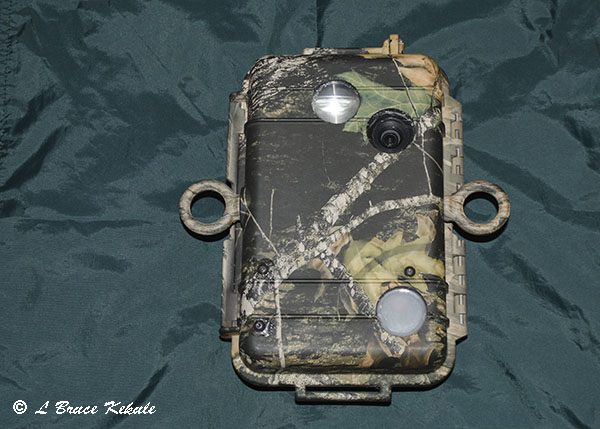
Last week, I visited my old buddy Suthad Sappu, a forest ranger in Kaeng Krachan National Park down in southwest Thailand along the border with Burma. We worked together along the Phetchaburi River deep in the interior of the park for some 10 years back during the 90s, and we got many tigers and leopards on camera trap plus loads of other cryptic creatures like elephant, tapir, gaur, bear (both species), fishing cat, banded palm civet, banded linsang and many more.

As we were chit chatting over dinner and drinks about our favorite subject, camera trapping, Suthad pulled out a very nice camera trap from his bag. It is a homebrew that was made up by ‘Trails End’ using a Sony P41/Snapshotsniper SS board/Pelican 1040/2 AA externals. It is very well built and looks new, and is unused. The case and eyebolts are dipped in a woodland type camouflage.

He says I can have it if I can get it working. Took me a few minutes with some fresh batteries and reset the date on the Sony. Flipped the toggle switch down and it fired up, and was working normally in a few minutes. I said thank you very much and smiled.
He has two more and I said I could get them going too. Does anybody know who ‘Trails End’ is and are they still in business? They certainly do very good work. I’ll be taking this cam along with a Bushnell Trophy Cam to India on April 3rd after tiger. The lodge I’m staying is reported to have leopards walking through the camp. Can’t wait to get there.
Some days are better than others….especially when a nice trail cam comes your way for free…!
Camera trapping a new wildlife trail and waterhole…!
Odd-toed ungulates and other fauna in Western Thailand
Some 40 million years ago, the tapir evolved and was found on many continents including North America. These creatures are now thriving in only two areas of the world: Southeast Asia has one species and South America three. The Asian tapir is the largest and have a very distinct two-tone black and white color pattern that acts like natural camouflage, especially at night where the black breaks up its outline. These odd-toed ungulates are now becoming quite rare due to poaching for their meat, and encroachment in tapir habitat.
A young tapir with a distinct ear marking on a wildlife trail
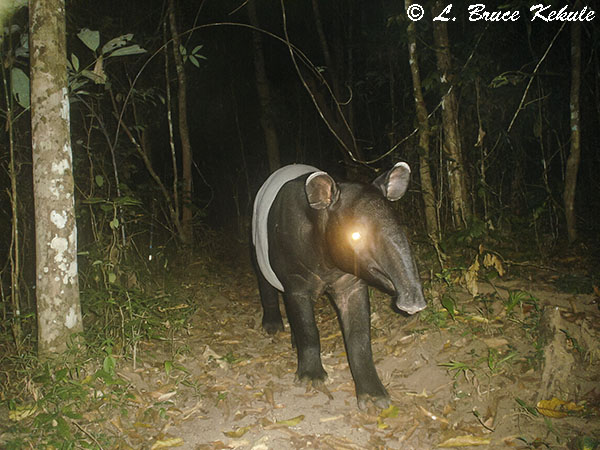
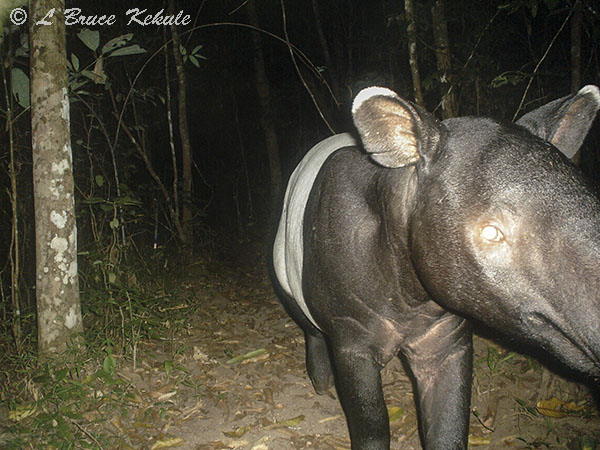

Another more mature tapir a week later
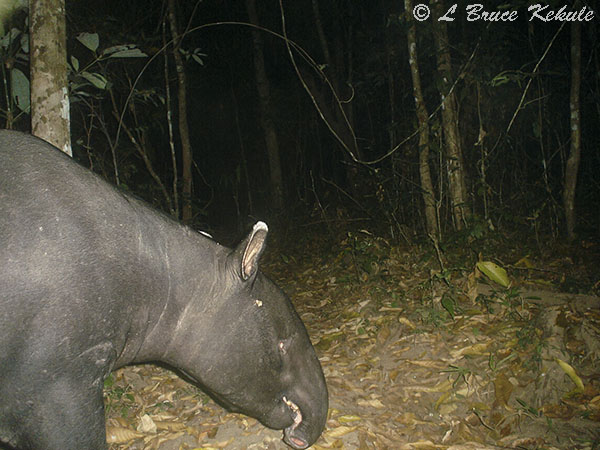
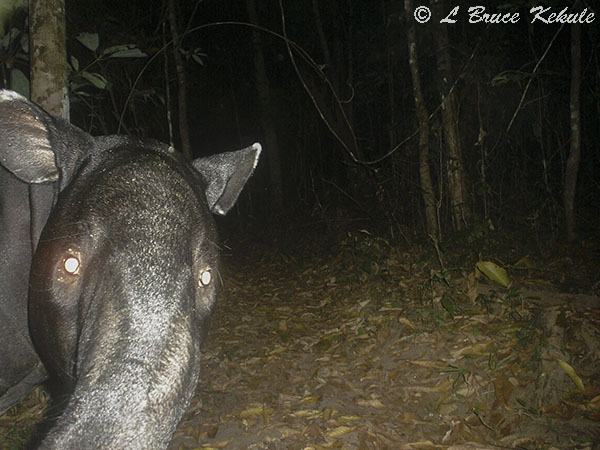

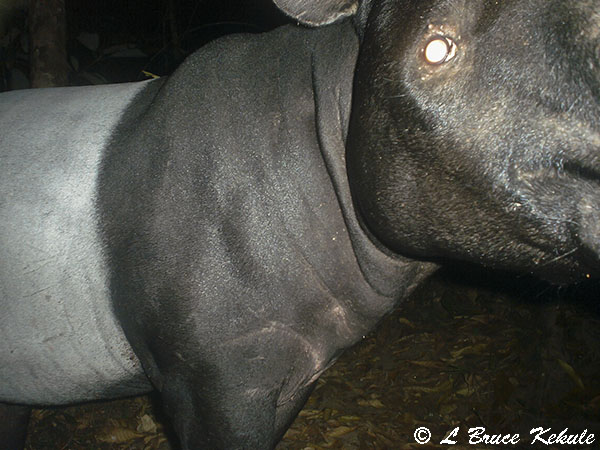
A female tapir at another cam
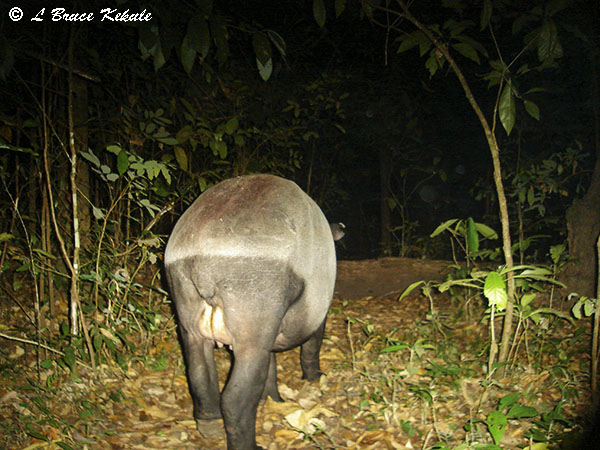
Other animals caught in this series include elephants, gaur, sambar stag and doe, wild pig, sun bear, porcupine and red jungle fowl.
Elephants pose for the cam


These creatures were camera trapped using three homebrew cams: a Sony P43/BFOutdoors/1040/C externals, a Sony S600/BFOutdoors/1040/C externals and a Sony S600/Yeticam/alloy box.
Gaur also came through
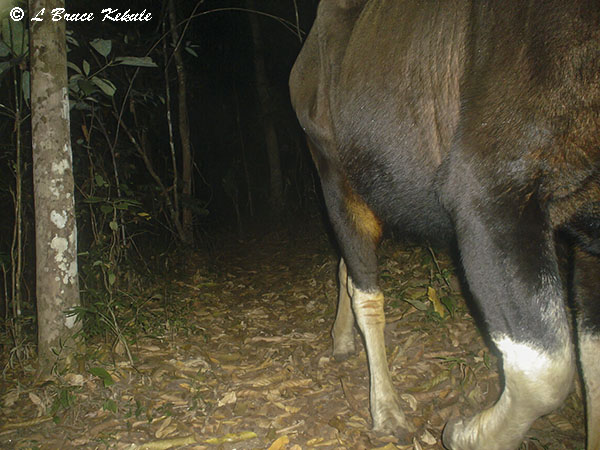

These cams were setup by a wildlife trail and a waterhole deep in the interior of Huai Kha Khaeng Wildlife Sanctuary and left for one month during January to February 2013.
Sambar stag and doe

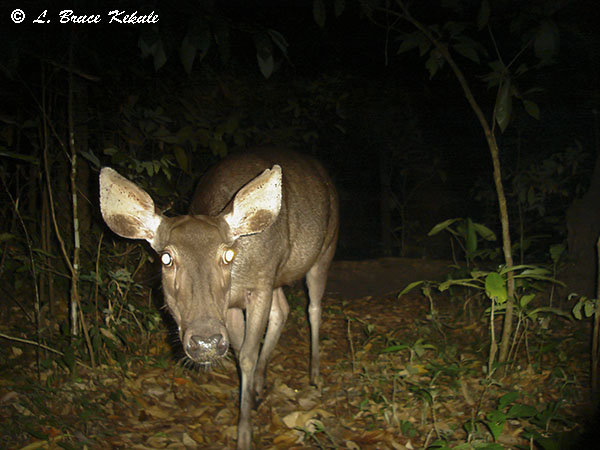

This place is simply amazing with Asian forest ecosystems thriving today that once almost completely covered most of Thailand. In one century, humans have overcome most of the country except for a few places.
Asiatic sun bear


Throughout the Kingdom, the once large tracts of forests are now sliced-up and wildlife has disappeared. Huai Kha Khaeng remains the shinning star of Thailand’s natural legacy going back to the dinosaurs and before…!
Sambar at a waterhole
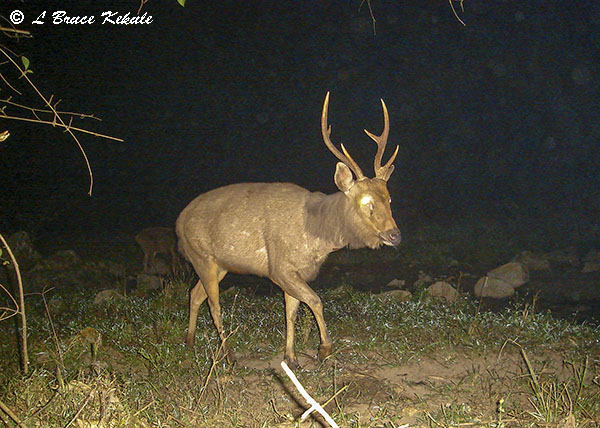


Porcupines

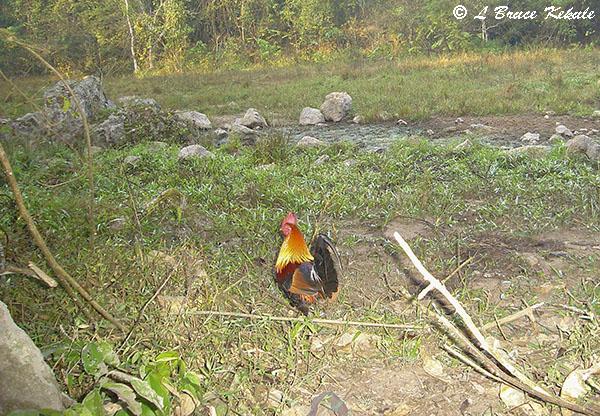
Red jungle fowl
I now have setup my Canon 350D DSLR with three flashes on this trail. I’m hoping for some good shots with this rig and will be posting these sometime at the end of March.