

Posts Tagged ‘endangered’
Gurney’s Pitta – The last few stragglers
WILD SPECIES REPORT
Avian fauna on the brink of extinction in Thailand

Gurney’s pitta male – one of the last few surviving birds at Khao Nor Chuchi
In October 2001, I did a story entitled ‘On the verge of extinction’ for the Bangkok Post Nature section about an amazing bird that had been rediscovered in 1986 by my close friend and associate Phillip D. Round, Thailand’s eminent ornithologist after almost three decades of no sightings. Prior to that, it was thought to be extinct in the Kingdom. The bird was listed as a flagship species for conservation and put on Thailand’s 15 reserved species list.
The Gurney’s pitta Pitta gurneyi is a medium-sized passerine bird that completely disappeared from all lowland evergreen forest south of Prachuap Khirikhan province where natural forest was destroyed primarily to grow palm and rubber trees except for one little patch in Krabi province. This site is known as Khao Nor Chuchi or Khao Pra-Bang Khram Wildlife Sanctuary – the only known place in Thailand where this rare pitta still survived. The area definitely needed extreme management to save this creature from extinction.

A Gurney’s pitta female in Khao Nor Chuchi
In historic times, the range of the Gurney’s pitta was along the coast and inland areas on both sides of the Thai peninsula, in the provinces of Trang and Krabi on the western side, and Nakhon Si Thammarat, Surat Thani, Chumphon up to Prachuap Khirikhan on the east.
It also survived in southern Burma where this beautiful bird was first discovered way back in 1875 by a wildlife specimen collector working for Allan Octavian Hume, a prominent ornithologist. The exotic bird was named rather prosaically after Hume’s friend, J.H. Gurney, a Fellow of the Zoological Society of London.
Lowland rainforests up to 200 meters above sea level are home to an unsurpassed diversity of flora and fauna including the Gurney’s. Due to excessive human settlement and agriculture, this unique bird has diminished to the point of no return here in Thailand.
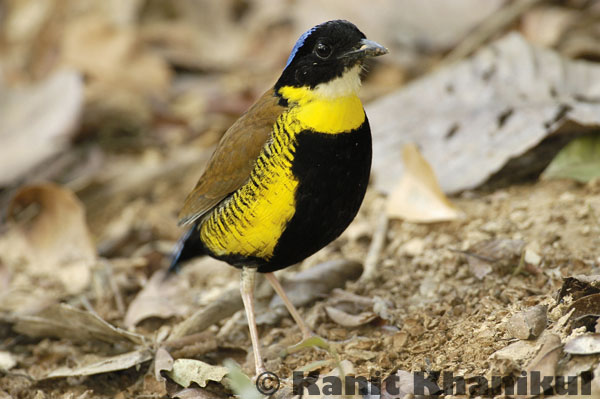
A male Gurney’s pitta photographed is 2001
Encroachment and forest destruction has not been the lone evil. Some poaching of the Gurney’s for the black market trade have also taken its toll. It is said a pair of a male and female fetches a hundred thousand baht or more from rich collectors of exotic birds at the infamous Chatuchak Market in Bangkok. In fact, the bird’s beauty has been its worst enemy. Even though protection and enforcement has improved over the years, catching the big traders and buyers of wildlife black market items has been slow and sometimes non-existent at times.
However, over in Burma, thousands of Gurney’s are purported to survive after quite a few surveys since early 2003 when Jonathan Eames with BirdLife International and other associates found the bird at four different sites. Jonathan returned in 2004 and found more locations with the bird but political instability and very restrictive government regulations threaten to keep researchers away, while landmines and bandits further discourage access.
Since then, Dr Paul Donald of the Royal Society for the Protection of Birds (RSPB) has surveyed many areas and confirmed that almost all of the world’s population of Gurney’s pitta is located in Myanmar but the forests there are also being decimated for palm and rubber agriculture and hence, the bird there is still under serious threat. This granted the species a reassessment from the IUCN, going from critically endangered to endangered.
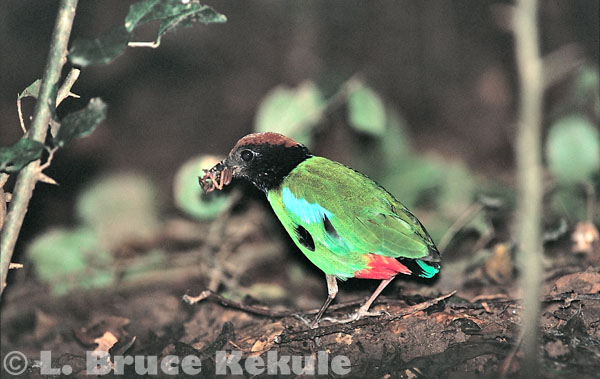
Hooded pitta with worms feeding its chicks somewhere in the forest
My first encounter with a Gurney’s was back in 2001 when I made an effort to capture this bird on film. The following is an account of that wonderful moment that was very brief, and I only managed to get one shot shown in the story.
“Dark morning stillness in thick lowland rainforest is broken by muffled footsteps as two humans move slowly down the trail. We carry heavy camera equipment to a photographic blind erected deep in the jungle the previous evening. Condensation is heavy as I set up in the hide. My friend and guide, Douglas Judell departs quickly and noisily – the intent being to convey the message that both of us have left the area.
As animals of the night retreat, I wait for the first signs of dawn. My goal is to photograph this elusive pitta known to frequent this small patch of forest. Morning light awakens the jungle and the sounds of dripping moisture begin to be replaced by the noise of birds and insects starting their day. Hidden in the blind, I remain vigilant for the slightest movement on the forest floor. About 8am, light from the sun filters through the canopy in patches.

One of several hooded pittas that showed-up looking for earthworms
A sudden movement shows a hooded pitta, another species common here, hopping about looking for earthworms. This striking blue, green and red bird with a dark brown crown moves closer to the blind seemingly oblivious to the looming structure. Snapping only a few shots for fear of alarming the other denizens of this forest, I continue to sit quietly hoping the ‘forest spirits’ will answer my wish.
A passing morning rain shower quickly passes by and as if on cue, a blue, black and yellow bird suddenly appears in front of the blind about five meters away. Perhaps sensing danger, it quickly hops into the darkness of the forest but a minute later returns just long enough for only one shot of this rare bird. I quickly forgot about the wet grubby conditions and the long road trip of more than 700 kilometers from Bangkok to this place. I was elated to say the least.”

My first Gurney’s pitta male photographed by ‘U’ trail
When I did the story in 2001, there were about 11 pairs and some individuals left in the sanctuary. The decline was evident and it became a worry for the Department of National Parks (DNP). Drastic measures were needed but they never came. When Khao Pra-Bang Khram was up-graded in 1987 by the Royal Forest Department (RFD) from a non-hunting area to a wildlife sanctuary, most of the forest where the bird was actually found unfortunately was not included in the protected area. It is a wonder how things sometimes come to pass.
This then became a pitched battle between conservationists, local villagers and the DNP. Forests were being cleared for palm and rubber and there was nothing the department or NGOs’ could do in certain areas because this land was outside the sanctuary and was the property of the locals. Forest destruction was severe and it put a terrible strain on the ecosystem.

Emerald pond algae not far from the sanctuary headquarters
Another very negative aspect is the visitation by hundreds of tourists almost daily at the Emerald Pond not far from the core area. This place use to be peaceful and beautiful, and a decade ago there were just a few noodle stands and trinket shops at the front. Now this has expanded 100 percent and has become a big business catering to the visitors. Buses and vans are parked everywhere. There are very few birds around the pond now and trash is a serious problem.
Two weeks ago, I made one last ditch effort to photograph this bird. Permission to enter the sanctuary was graciously given by the Wildlife Conservation Division at DNP in Bangkok. I packed-up my old pickup truck and headed South to the small village in Krabi province named Ban Bang Tieo where the sanctuary headquarters is situated.
I met with the new superintendent Nikom Srilamoon of Khao Pra-Bang Khram, requesting authorization to enter the sensitive area in order to catch the Gurney’s on digital. He has certainly inherited a tough job!

Emerald Pond in Khao Pra-Bang Khram
The first day was comprised of walking the nature trails ‘U’ and ‘N’ where the bird is normally found to see first hand the situation on the ground. Many parts are, overcome by humans and their destructive vises of throwing trash on the ground and cutting trees down. Someone has established a rubber plantation in the remaining core area of the sanctuary. Motorcycle tracks are everywhere and it is said spot-lighting for night creatures like frogs and mouse deer goes on. It seems that just about every square meter is under threat.
The next morning, I decided to set-up a quick blind in a palm plantation that borders forest early the next morning at first light. About 7am, a couple female pitta skirted the forest for a couple of meters and then melted back into the thick vegetation. I did not get a shot, as they were too quick.
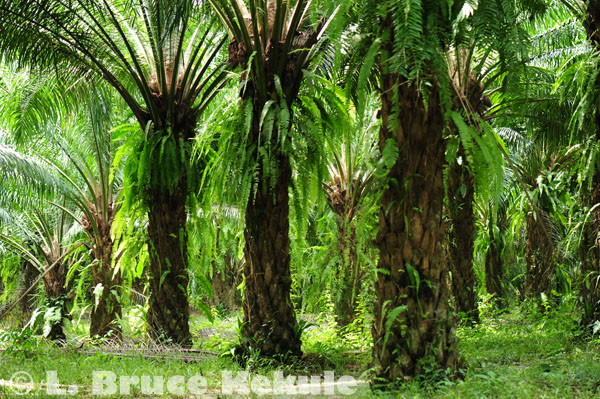
Palm oil plantation butted-up to the forest in Khao Pra-Bang Khram
In the afternoon, I went back into the trail system to scout a new location. I chose to erect a blind in a gulley with a stream that cuts through the habitat. Sharp thorns are everywhere but it is very secluded from the main nature trails and excessive activity.
The following morning I was sitting alone in the dripping forest at 5.30am sharp. My two helpers departed quickly after installing a slave flash on a tree to the left of my position. Then the rain started and did not let up until late afternoon when the sun finally peaked through the clouds for a short period.

Another male photographed in the sanctuary
Birds immediately began calling and activity picked up. Then, I saw movement ahead and a male Gurney’s popped out of the forest and stayed in front of the blind for only a few seconds as I fired off a short burst including the lead photo. It was exciting, and will be etched in memory. These creatures are still surviving here but they are now hard to locate and stay elusive for the most part. I thanked the ‘spirits of the forest’ for this rare encounter, and the rain came again till just before darkness.
BirdLife International, BirdLife Denmark, DANCED, Bird Conservation Society of Thailand, the Oriental Bird Club and the RSPB have helped the DNP to implement numerous projects at Khao Nor Chuchi, but these efforts have only slowed rather than halted new settlements and the destruction of the forest.

Banded pitta male at Khao Nor Chuchi
The population of Gurney’s pitta at Khao Nor Chuchi has declined drastically, dropping from an estimated 40 pairs in 1986 down to about 20 pairs in the mid-1990s’. At one abandoned nest, local researchers found bird (mist) nets placed by some people to capture this rare bird. The last estimate from various sources on the number of birds is less than ten individuals (both male and female) survive in the core area. This is serious and the prospect of extinction is truly depressing.

Banded pitta female at Khao Nor Chuchi
Unless Khao Pra-Bang Khram protection and enforcement can be quickly implemented and expanded to include all the remaining intact lowland forest, and previously cleared areas are reforested, the species in Thailand faces a very bleak future. Quick and decisive action is the only remedy and it is absolutely no use pointing the finger of blame on anyone.
As a flagship species for the conservation of southern Thailand’s lowland rainforest, only time will tell if the Gurney’s pitta can survive. If this beautiful creature disappears, it will be a sad day for nature conservation in the Kingdom.
THAILAND’S 15 RESERVED SPECIES
Thailand’s list of 15 reserved species is so out-dated it is now covered in dust and needs updating. Two lists should be established: one for species that are truly extinct in the wild, and another list for rare creatures like tiger, leopard, gaur, banteng, Asian elephant, Asiatic bear and sun bear plus the remaining survivors shown below. There are also many other wild animals that need special status!
1) White-eyed river martin: Presumed extinct globally since 1985-86. The last known specimens were from Bueng Boraphet Non-hunting Area in Nakhon Sawan province.
2) Javan rhino: Once found in many large forests and now extinct in Thailand for more than 25 years.
3) Sumatran rhino: Extinct in Thailand for more than a decade or two. A few individuals were reported in Hala-Bala Wildlife Sanctuary. down south in Narathiwat province.
4) Kouprey or grey ox: Extinct in northeasternThailand for at least 30-50 years and absolutely no reports from Cambodia although extensive surveys have been carried out. The Khmer Rouge during wartime is probably responsible for their demise.
5) Dugong or sea cow: Extremely endangered in the seas of Thailand. There are a few survivors but are probably doomed by excessive fishing and tourism.
6) Wild water buffalo or Asiatic buffalo: Endangered with about 50 individuals surviving in only one location: Huai Kha Khaeng Wildlife Sanctuary in western Thailand.
7) Eld’s deer: There are two sub-species (Siamensis and the Burmese) and both are extinct in the wild of Thailand.
8) Schomburgk’s deer: Extinct globally since 1935. They were endemic to the Central Plains of Thailand and the last one was killed in a temple in Samut Prakan by a village drunk in 1932. Sad fact!
9) Serow: These goat antelopes are endangered but they still survive in some mountaInous areas that are protected. Their horns are eagerly sought after and used in making knives for fighting cocks in the South.
10) Chinese goral or grey tailed goral: These goat antelopes are seriously endangered; a couple of hundred might live on mountaintops in northern Thailand.
11) Gurney’s pitta or black-breasted pitta: They are technically extinct in Thailand. There are a few individuals surviving in Khao Phra-Bang Kram Wildlife Sanctuary in Krabi.
12) Eastern Sarus crane: Extinct in Thailand for more than 50 years. They do survive in Vietnam and Cambodia but their numbers are low.
13) Marbled cat: They still survive in the thick evergreen forests of Thailand but their numbers are unknown.
14) Asian or Malayan tapir: They still survive in the western flank of Thailand from Thung Yai Naresuan WS all the way down to Malaysia. However, they are hunted for bush meat in many places in the South.
15) Fea’s muntjac: They still survive in the western flank of Thailand from Thung Yai Naresuan Wildlife Sanctuary all the way down to Phang Nga and Surat Thani in the South, and are hunted for meat throughout their range.
PLEASE NOTE:
While I was researching the Gurney’s Pitta on the web, I found a resort website in Krabi using my ‘first’ Gurney’s pitta photograph with out my permission. On photographs of great importance, I will now be using a new watermark covering the subject matter with my name and copyright. I regret this action but do not appreciate people stealing my photographs off the web for their own business purposes. These people have no professional ethics!
CREDIT FOR PHOTOGRAPHS
I would like to thank my good friend Kanit Khanikul for the use of his photographs of Gurney’s and Banded pittas. He certainly has one of the best collections of birds from Khao Nor Chuchi in Thailand and he has spent a lot of time and money recording avian fauna there. He should be praised for his great work!

Keang Krachan: Rare creatures surviving in the park
A collection of photographs taken from 2001 to 2008
of some rare Asian animals still thriving in this amazing forest

Fea’s muntjac camera-trapped at Kilometer 33 on Phanern Thung mountain

Male muntjac also known as common barking deer at a mineral lick
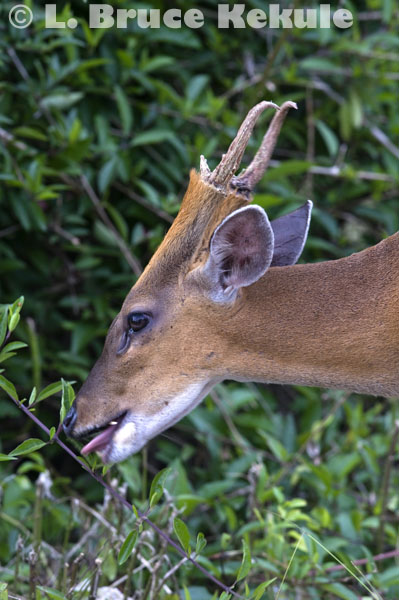
Male muntjac feeding on leaves

Gaur cow at a mineral lick in the interior

Small gaur herd at another mineral lick

Gaur bull and cow footprint compared to my hand

Asian tapir swimming in the Phetchaburi River
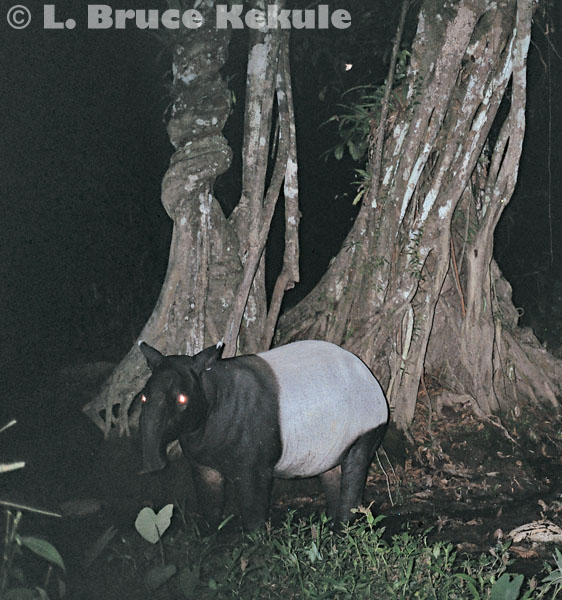
Tapir camera-trapped near the Phetchaburi River

Serow camera-trapped on old logging road

Tusker camera-trapped at a mineral deposit at kilometre 12
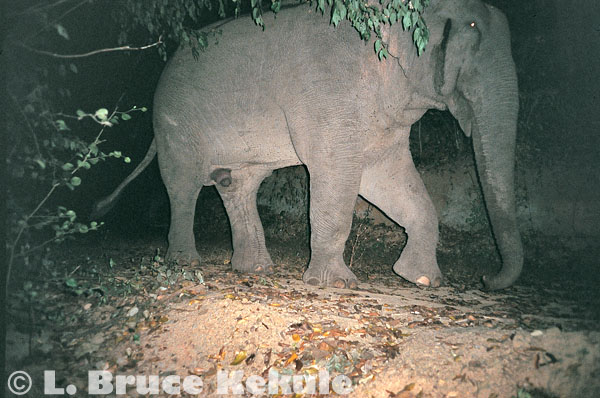
Tuskless bull elephant in ‘musth’ camera-trapped on an old logging road
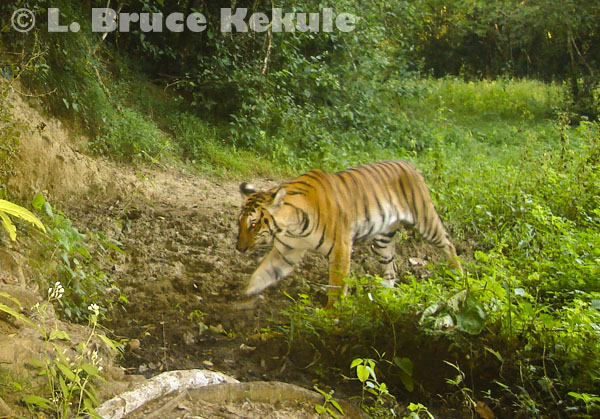
Tiger camera-trapped at a mineral lick in the interior
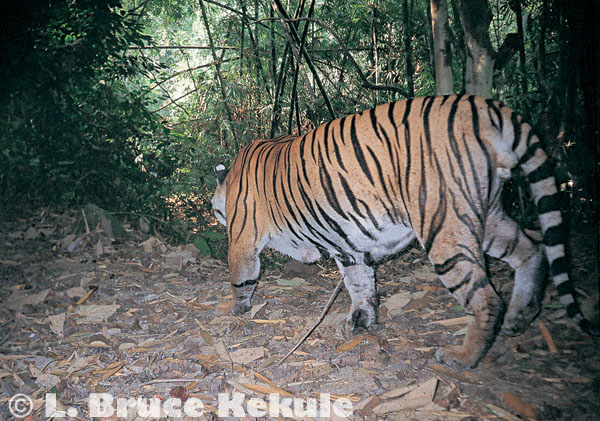
Indochinese tiger camera-trapped by the Phetchaburi River

Asian leopard camera-trapped on a nature trail

Indian civet caught near Ban Krang campground in the park
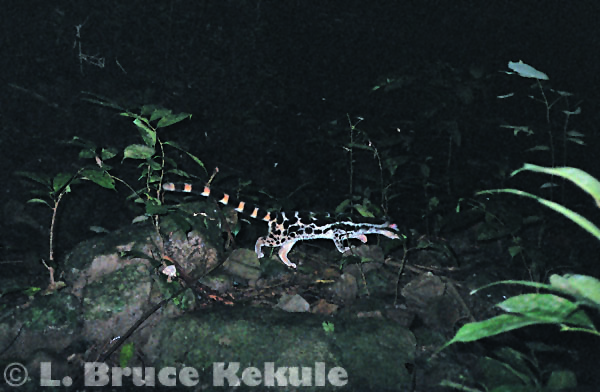
Banded linsang camera-trapped on a dry streambed
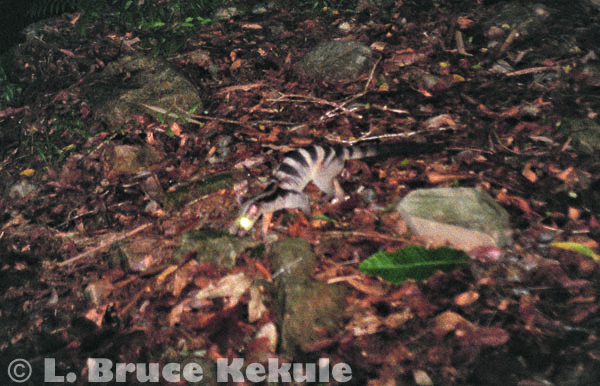
Banded palm civet camera-trapped by a stream deep in the interior

A king cobra hunting for prey by the Phetchaburi River
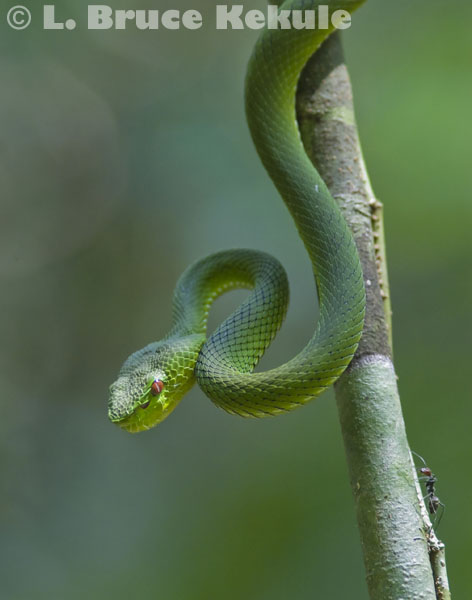
A green pit-viper and carpenter ant on a small tree
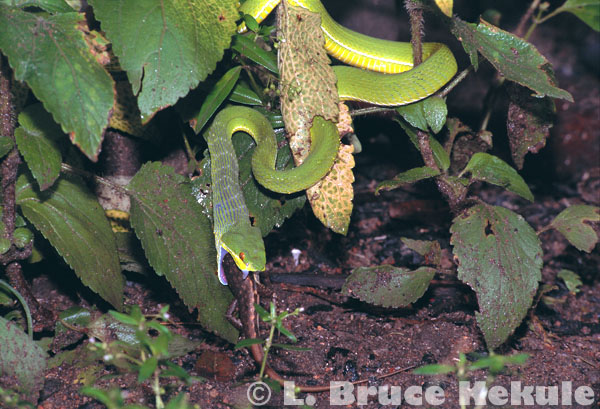
A green pit-viper swallowing a skink
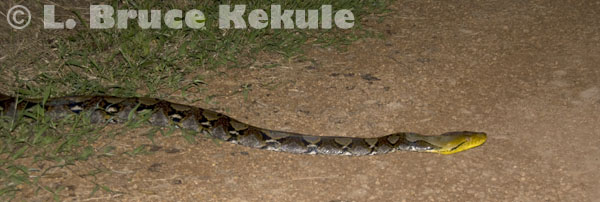
Reticulated python on the road in Kaeng Krachan
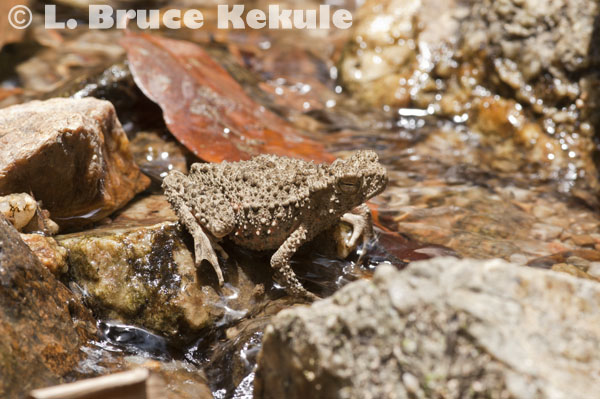
Horny tree frog in a stream deep in the park

Giant tree frog further upstream

Great hornbill flying out of a fruit tree

Oriental Pied hornbill feeding its chicks at the nest

Wreathed hornbill at a nest
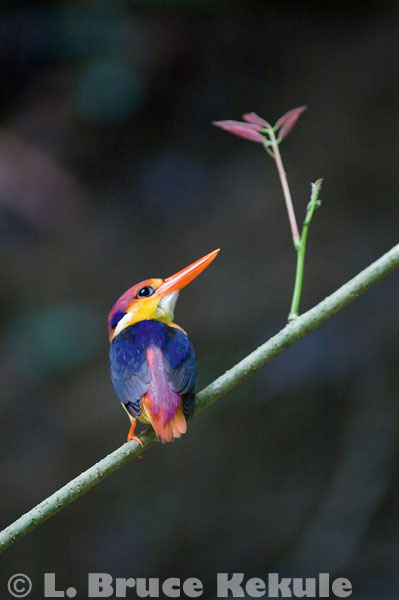
Oriental dwarf kingfisher near it nest

Pied kingfishers with a fish on a tree branch
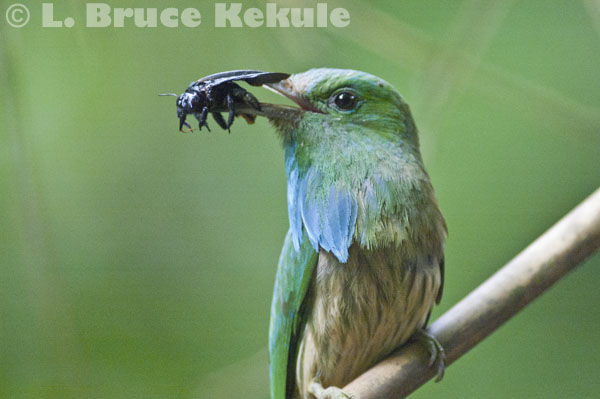
Blue-bearded bee-eater with a beetle for its chicks

Red-bearded bee-eater close to its nest in a sandbank
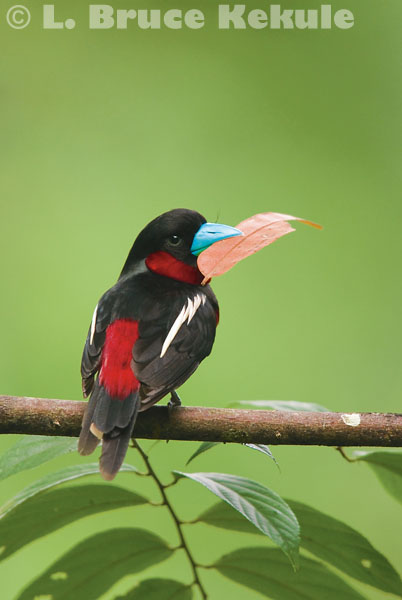
Black-and-red broadbill with a bamboo leaf
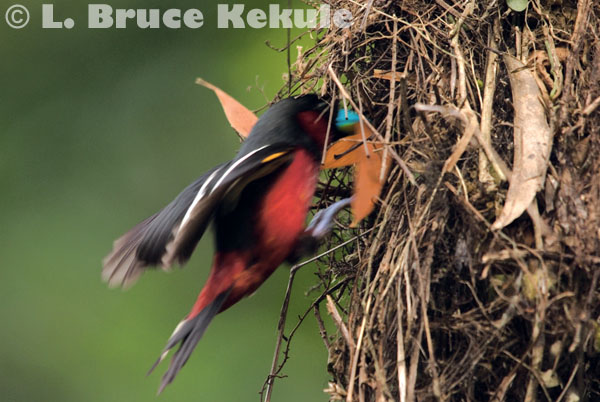
Black-and-red broadbill building a nest

Javan Frogmouth by the Phetchaburi River
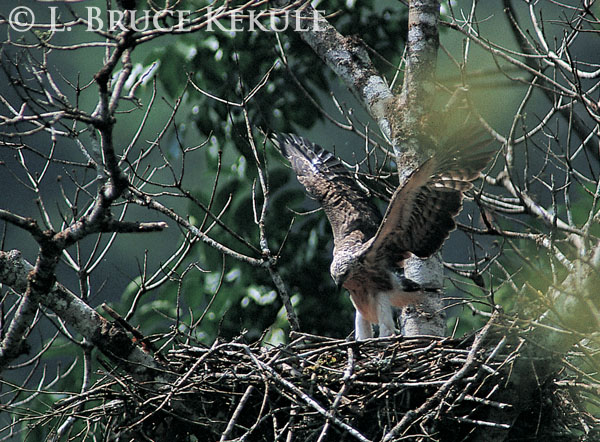
Lesser fish-eagle chick exercising its wings high up a very tall tree

Lesser fish-eagle mother and chick on the nest above the Phetchaburi River
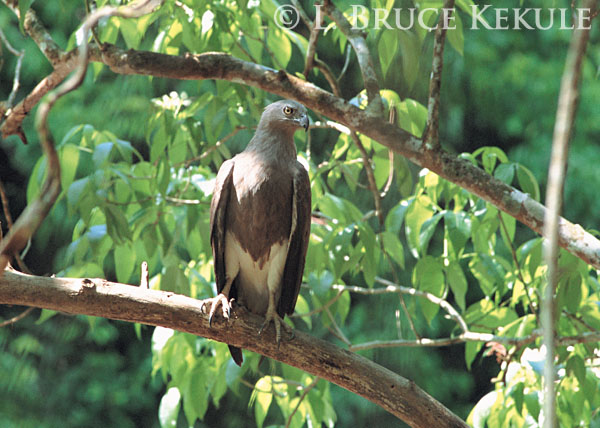
Lessor fish-eagle on a tree branch behind my blind over the Phetchaburi River

River carp in the Phetchaburi River

Gibbon hanging from a bamboo on Phanern Thung mountaintop

Dusky langur near the Phanern Thung ranger station
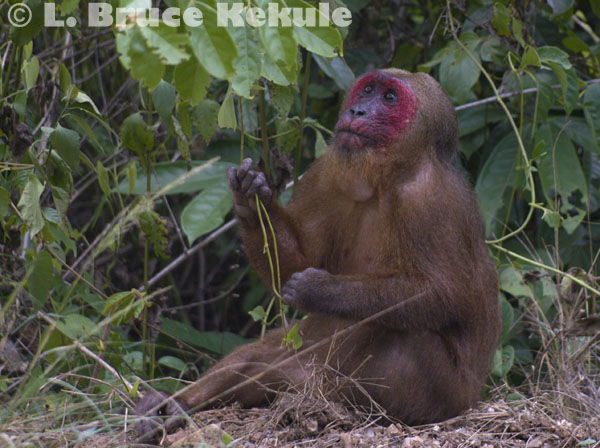
Stumped-tailed macaque by the river

Rainbow over the Phetchaburi River
Kaeng Krachan National Park is an amazing place but is fraught with poor management and protection. There are many other animals and ecosystems not shown here but this place is truly one of Thailand’s greatest protected areas.
It takes lots of hard work to get down to the river and collect photographs of the creatures thriving there. But diligence, determination, the right equipment, money and with good guides, is also within the reach of serious amateur photographers or naturalists who just want to look.
The opportunities are endless. It is hoped these photographs will create awareness and help this place survive into the future, so that generations to come can also enjoy the beauty of nature in Thailand’s largest national park.
My next post will be a collection of photographs from Huai Kha Khaeng like this of that amazing World Heritage Site, and hopefully sometime before I travel to Africa for a safari to Kenya in mid-August.
Phu Khieo: Saving a species
Land of the plateau – pristine forest in the Northeast
Hog deer haven and introduction site
On Thai wildlife day, December 26, 1983, Her Majesty Queen Sirikit released four hog deer made up of two mature males and two females in breeding age at ‘Thung Kamang’ grassland in Phu Khieo Wildlife Sanctuary situated in the northeastern province of Chaiyaphum. This was the beginning of what is now a successful introduction program in order to save the species.
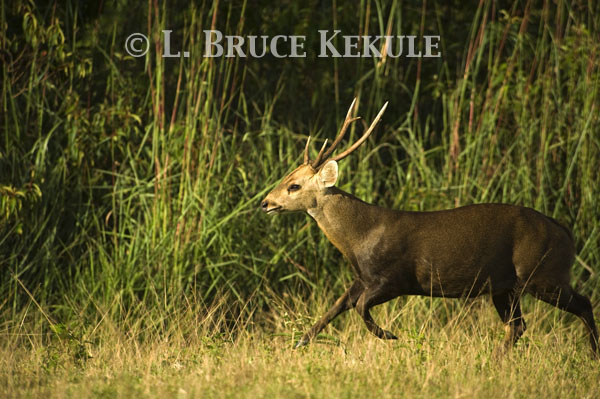
Hog Deer on the run in Phu Khieo Wildlife Santuary
The Crown Prince in 1987 introduced another four hog deer, and reintroduced several male and female sambar (Thailand’s largest deer) in the same area. In 1992, Her Majesty the Queen once again released more hog deer to boost the numbers of the herd. She also released three Eld’s deer (one male and two females). Unfortunately, this species has been difficult to monitor because of their preference for deep forest unlike the hog deer that prefer grassland and swampy habitat.
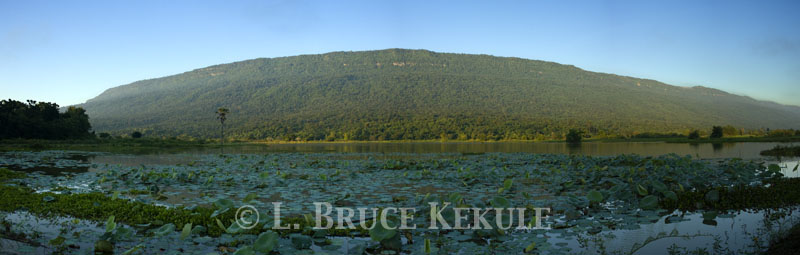
Phu Khieo massif
Over the years, the herd of hog deer has steadily increased due to a safe haven away from poachers and encroachment. In 2004, there were approximately 75 deer, and in May 2008, Kasetsart University conducted a survey around the grasslands and headquarters area counting more than 120 individuals. There are now approximately 140 hog deer in three or four separate herds. The sanctuary officials are constantly monitoring the herd with six hog deer fitted with radio collars and have established their range in the sanctuary.
It’s November and not a single cloud can be seen in the clear blue sky. Early morning air is crisp and cool. Heavy dew blankets Phu Khieo as mist rises from the forest. The sun arcs up into the sky and morning heat builds up. A mature sambar stag barks a warning call alerting all the animals within audible range that a predator is on the prowl. In the grasslands, a herd of hog deer grazing on tender young shoots is now on high alert. They are nervous and begin moving as the top carnivore of this forest stalks them.

Sambar yearling doe in late afternoon light
A pack of hungry Asian wild dogs working like a well-oiled machine concentrate on their target. They bump into the deer scattering them. The dogs go after an inexperienced doe and separate her from the herd. The chase is on. The deer becomes confused and makes a wrong turn. The dogs pull the struggling creature to the ground and go in for the kill. Within an hour the carcass is stripped and almost nothing is left except a few scraps. But it’s just another day in the balance of nature where natural selection and the struggle for life and death between predator and prey is played out.
In the early 1830s’ during the reign of King Mongkut, the French missionary Monsignor Jean-Baptiste Pallegoix, in his excellent book entitled ‘Description of the Kingdom of Siam’ published in 1850 reported seeing large herds of deer grazing on the central plains. Hog deer were still quite common in the Kingdom even at the turn of the 19th Century and could be found in all the river basins of the far North, the Northeast, the West and the whole of the Chao Phraya River basin and its tributaries. Hog deer fossils taken from sand dredging in many rivers dates back thousands of years to the Holocene, and teeth fossils of hog deer were discovered in a cave in Phu Khieo dating to the Pleistocene.

Hog deer buck and doe – the male has a radio collar
Unfortunately, these lowland deer were totally overcome by habitat destruction converting natural grasslands and swampy areas into agricultural land throughout the hog deer’s former range. Hunting deer was also a big business and warfare in Asia drove the skin trade. From the late Ayutthaya Period up to the early 20th Century, Siam exported millions of deer pelts from all the large species of deer including Schomburgk’s deer (extinct), sambar, Eld’s deer and hog deer to Japan. Deerskin being soft and supple was used to make leather for Samurai armor and clothing, boots and equipment mostly for the military. This was one of the main reasons for the disappearance of these remarkable creatures from the wild.
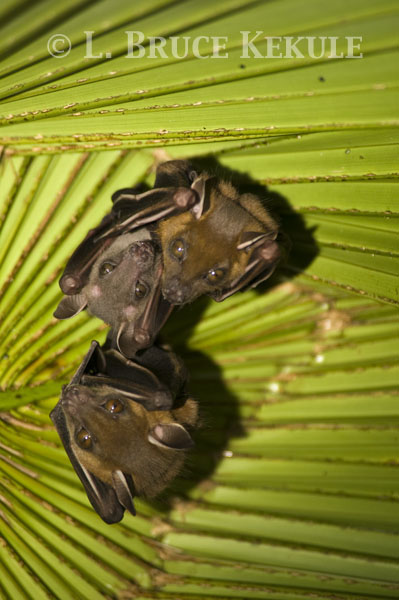
Short-nosed fruit bats
Captive breeding of hog deer, Eld’s deer, sambar and muntjac (barking deer) is carried out in some of the 22 wildlife breeding centers around the Kingdom set up by the Royal Forest Department, and now managed by the National Parks, Wildlife and Plant Conservation Department (DNP). The Phu Khieo Wildlife Breeding Center outside the sanctuary has been active since 1983 and is still breeding deer and wild pigs for future release into other wildlife sanctuaries and national parks.
Essarn is not all barren and dry like many people think. Over in the western part of the Northeast is Phu Khieo – Nam Nao Forest Complex that incorporates 19 protected areas, covering some 7,725 km2 (twelve national parks and seven wildlife sanctuaries) in the provinces of Chaiyaphum, Khon Kaen, Nong Bua Lum Phu, Udon Thani, Loei, Phechabun and Lop Buri. The complex incorporates a number of large forests on the Phetchabun and upper Dong Phayayen ranges. Phu Khieo, established in May 1972, is the largest sanctuary in the complex at 1,560 km2 made up of, a rocky plateau and steep mountains. The protected area is covered in forests of pine, deciduous, dry dipterocarp and evergreen with many streams that flow into the Chi, Lam Phrom and Sa Phung rivers.

Bird-eating spider
Phu Khieo has elephant, gaur, sambar, muntjac, mouse deer, tiger, clouded leopard, golden cat, back-striped weasel (extremely rare), black bear, gibbon, langur and macaque plus many other mammals can still found here. Jeffery McNeely found tracks in 1977 of the Sumatran rhinoceros on a mountain in the middle of the sanctuary. The last set of rhino footprints was recorded by the sanctuary staff some 10 years ago but has not been seen since. Crocodiles are thought to lurk in the backwaters but again, only footprints and feces have been discovered several years ago. These two species need further investigation and research to establish if they still exist, especially the rhino.
Rare birds such as the Oriental darter and white-winged duck live in the secluded wetlands found in this forest. Other birds include hornbill, osprey, black baza, blue pitta, Siamese Fireback, plus loads of babblers, flycatchers, barbets, kingfishers and other forest birds. The very rare purple cochoa has been sighted and photographed here.

Oriental Darter by the lake
Much research has been carried out by foreign and local researchers from various organizations. Stonybrook University in New York sent a team to monitor and record behavioral habits of the Phayre’s langur and crab-eating macaque. Lon Grassman, as a master student with Kasetsart University, did a camera-trap survey and, collared golden cat and clouded leopard plus other carnivores with support from Texas A&M University and he received his PhD from this excellent work. Kitti Kreetiyutanont who heads the Phu Khieo Research Station has done much research on biodiversity of flora and fauna found here, and in the buffer zone outside the sanctuary. He also has done some archaeology work finding pottery and tools thousands of years old. There are some cave drawings in the sanctuary indicating past civilizations. Wanchnok Suvarnakara, the deputy superintendant, is an avid wildlife photographer and has recorded many species on film and digital, and published a photographic book.
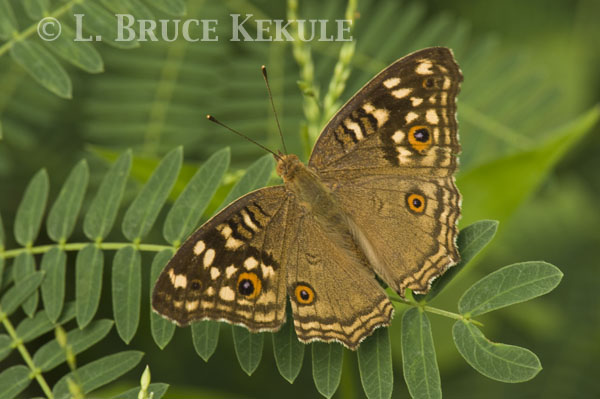
Pansi butterfly
For the first time in the history of wildlife sanctuaries since Salak Phra in Kanchanaburi was established in December 1965, a woman has been nominated as superintendant to Phu Khieo. Dr Kanjana Nitaya received a doctorate on management, and has run this protected area with determination to succeed. The staff and locals who have benefited from her management skills and leadership over the last four years respect her. In 2006, Phu Khieo was voted as the best wildlife sanctuary in all categories by DNP due to criteria established by the department. She is proud of this achievement and hopes this will help the conservation of this magnificent place well into the future.

Bombay locust
However, poaching and encroachment is still an on-going problem for the staff. Another serious long-term idea from politicians in the lowlands is to build a dam across the Sa Pung Nua River on the southern face of the plateau not far from Nong Bua Daeng in Chaiyaphum. If this dam were to become a reality, a large swath of forest would be inundated and damage the ecosystem already in jeopardy. All efforts should be made to stop this project before it goes too far. As Thailand’s best wildlife sanctuary, it should not be compromised by the construction of a man-made scheme.
Saving a species from extinction should be a top priority of the DNP. Other ungulates like goral, serow and banteng should be reintroduced into protected areas where they once thrived. Some may argue against introduction or reintroduction, but as we loose more and more species, release is a practical way to save Thailand’s rare animals from extinction in the wild. It is up to the department to instigate and increase these introduction/reintroduction projects, and then to protect these animals from danger by all means available. Budgets for enforcement and protection need to increase, and more staff to man any project to save a species from extinction is an utmost priority.
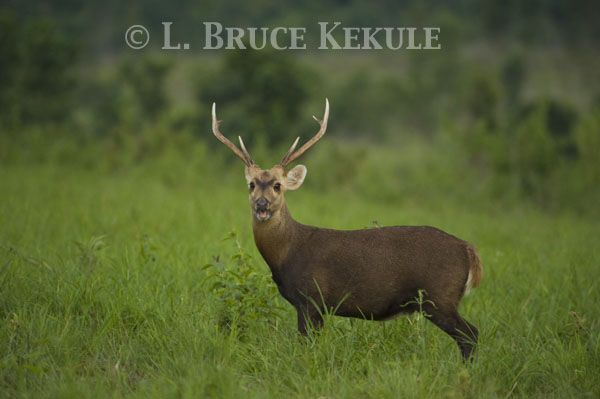
Hog deer buck in the grassland
Historically, the range of the hog deer spread from India and Nepal, east through Burma and Thailand, to Laos, Cambodia and Vietnam. This deer is now restricted to just fragments of its former range. In Thailand, the last sighting of hog deer was in Nong Khai province in the Northeast sometime during November 1963. There are some hog deer herds in the wilds of Cambodia and Laos.
Hog deer were typically found on alluvial plains and lowland forest along rivers, particularly near marshes with tall grass. Today it would be impossible to reintroduce these deer into any of their former habitat, but a few protected areas like Phu Khieo are ideal. Any introduced or reintroduced species needs the full protection afforded by a national park, wildlife sanctuary or non-hunting area.
Hog deer are medium-sized animals that resemble the larger and more common sambar deer in appearance. Male hog deer antlers are similar in shape as sambar but smaller. Depending on the season, they have grayish to dark brown fur. Females like all other deer species, have no antlers. Fawns have spotted coats. Spots can also be clearly seen on some adults.
These deer are more of a grazer than a browser and feeds on grass. They are gregarious, forming large family groups. The rut starts in September and goes on through October. A single fawn is born eight months later, during the rainy season around July or August. Hog deer received their name because of the way they move. Unlike other deer, they seldom jump over a bush or high grass, but they tend to run through the underbrush with head held low to the ground, much like a hog.
Goats in the Mist: Thailand’s Goat-Antelopes
Goral and Serow – Rare goat-antelopes
Photographing endangered species has become an obsession to me. Many of Thailand’s wild animals have come so close to extinction that their numbers are counted not in thousands or even hundreds but rather handfuls. Goral Naemorhedus goral are one such animal. Surviving on a few scattered mountaintops in northern Thailand, these even-toed ungulates are on the critically endangered list. With fewer than 60 individuals nationwide and low numbers at each site, the goral is considered one of the Kingdom’s rarest mammals.
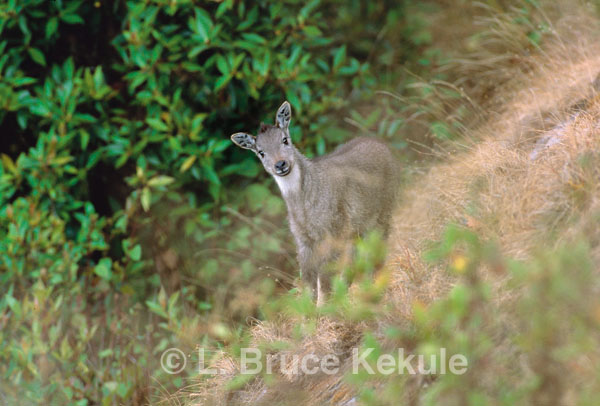
Goral kid in early morning light at Keiw Mae Pan cliff – Doi Inthanon NP
Acquiring photographs of these goat-antelopes is a daunting task considering their natural habitat. Hunting pressure and encroachment have forced them to retreat to the steepest, most inaccessible limestone cliffs and forested mountains. Goral are still found in seven protected areas including Doi Inthanon and Mae Ping National Parks, and in the wildlife sanctuaries of Om Koi, Doi Luang Chiang Dao, Mae Tuan, Mae Lao-Mae Sae and Lum Nam Pai, all in the north of Thailand.
Another species of goat-antelope surviving in Thailand is the serow Capricornis sumatraenis. Both species belong to the Bovidae family, which includes cattle, sheep, goats and antelope. Bovids are ruminants with four-chambered stomachs. In some areas, goral and serow share the same habitat. They have short bodies with long legs ending in padded, gripping hooves enabling them to inhabit steep mountainsides and cliffs. They eat grasses, herbs and shrubs and gain moisture from the plants they eat. Their keen eyesight provides early warning of danger. Like all bovids, they do not shed their horns like deer do with antlers. Serow are normally solitary whereas goral are usually form small herds from four to twelve individuals.

Male serow caught by camera trap
Serow and goral are creatures of habit. These lofty creatures have favorite places to sun themselves, usually a rock or grassy mound. They can stand for hours on one rock as I witnessed in Doi Inthanon where a goral stood from about 9am to almost 12noon. Another habit is to defecate at the same place. Piles of pellets can be found wherever they live, usually on or around a large rock. Research on both species has now been undertaken by Mahidol and Kasetsart University staff studying the impact of human settlements near goat habitat and surveying the remaining populations.
Unfortunately, both species have been hunted for their meat, horns and oil which comes from boiling the head. Supposedly, the oil is used to relieve arthritis and bone ailments. The horns of goral and serow are black, corrugated at the base, pointed and swept back (like their relatives, the Rocky Mountain goat of North America). Their horns are not impressive but are still sought after by poachers. The tip of serow horn is used to make deadly spears which can be attached to a rooster’s spur during a cock fight. It is eagerly sought after, especially in southern Thailand.

Goral kid close-up
Hunting has decimated both goral and serow populations that numbered in the thousands as recently as 50 years ago. In many mountainous areas hill tribe people live and encroach on the forest for the purpose of slash-and-burn agriculture. This has played a major role in the disappearance of both species in the North. Lowland people also hunted them. In other areas where the serow are found, they have declined due to continued pressure from man.
Two sites were chosen to photograph these mountain creatures: Doi Inthanon National Park about 80 kilometers south of Chiang Mai and Mae Lao-Mae Sae Wildlife Sanctuary some 60 kilometers to the north. Staff at the protected areas confirmed goral and serow were still surviving. Working closely with the Wildlife Research Division in Bangkok. My plan was to set up photographic blinds as close to wild goat domain as possible and use a long telephoto lens. But this was easier said then done.
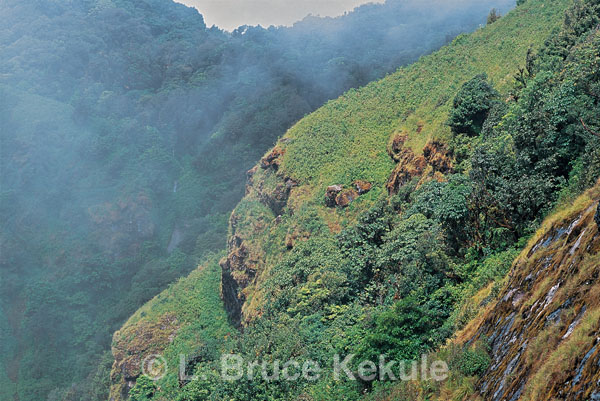
Keiw Mae Pan cliff in Doi Inthanon
Doi Inthanon, Thailand’s highest mountain, supports several small herds of goral around the summit. The animals are quite often seen close to Kew Mae Pan Nature Trail, developed in partnership with the Electric Generating Public Company Limited (EGCO) and the National Parks, Wildlife and Plant Conservation Department (DNP). Three kilometers from the road, a huge cliff rises some 2,500 meters above sea level and is criss-crossed with goat trails etched from thousands of years of use by goral and serow.
The skies are crystal clear over Doi Inthanon in November. This is truly a beautiful and remarkable place. But it does take some effort to get close to the cliff. The nature trail is strictly regulated and a local guide must be used for the three to four hour trek. If you are lucky and get up early, you may see goral and serow sunning themselves on rocky outcrops near the trail. Take a good pair of binoculars or telescope. This is also a good place for birdwatching, and you may see many species including the beautiful endemic green-tailed sunbird.
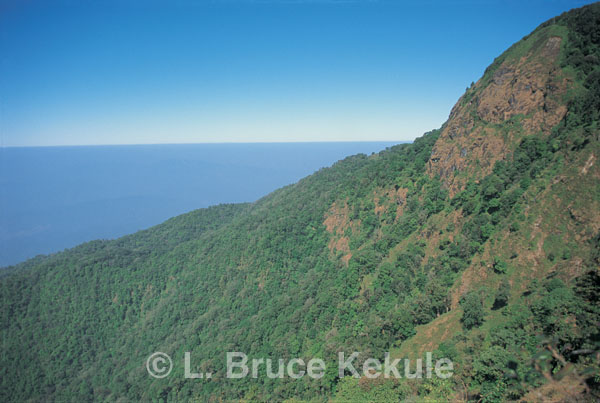
Doi Inthanon National Park
Mae Lao-Mae Sae is situated along the highway from Chiang Mai to Pai. A part of the sanctuary is divided by the road and Mon Liem, a giant granite massif, rises up to 1,200 meters above sea level. The sanctuary is home to a small herd of goral that survive on the summit. It is also criss-crossed by goat trails, and huge pine trees hundreds of years old are found here. The view is majestic, especially to the north where Doi Luang Chiang Dao Wildlife Sanctuary, another haven for goral, is situated. Wildlife sanctuaries are not open to the general public since they have been set aside for wildlife and biodiversity research. In October 2001, I glimpsed a male goral near the summit as the sun was going down. The goat unfortunately, was out of photographic range.
In November 2001, I visited the superintendent of Doi Inthanon to arrange a photographic trip after both goat species at the cliff. At 2,300 meters above sea level, temperatures can plunge at daybreak to zero degree Celsius with ice forming on the grass. It was tough getting out of the tent at 4 a.m. but it was important to move into the blind near the cliff face before the sun was up in order to photograph these wild goats. For the best photographic opportunities, the blind had to blend into the surrounding terrain so as not to spook the goats.
After four days of freezing, windy conditions, I spotted goral and serow on several occasions about a kilometer away. While scanning the cliff with my binoculars on the last morning, I detected a slight movement. A closer look revealed a male goral lying down on a buff about 500 meters from the blind. A short while later, he stood up. Using my 600mm Minolta lens with 2X tele-converter, I got some acceptable photographs of him.
This male had a fluffy white throat and underbelly. His gray winter coat was beautiful. After some time he did what goral do best – jumping straight down off the ledge in order to get closer to his mate who was feeding below. They butted heads affectionately a few times before disappearing into the maze of the cliff.
I made four trips to Doi Inthanon during the winter of 2001 and 2002 in search of goral and serow. Several herds of goral are still breeding here and can be seen almost every day. Serow are more elusive and only a few individuals were spotted from time to time. The spirits of the mountain listened to my prayers. On the last day of the fourth trip, a young goral about five months old appeared twenty meters away from me stamping its feet and snorting. It was nature at its best, making the front cover of this book.

Siriphum Waterfall in Doi Inthanon National Park
These wild goats have an uncertain future. Uncontrolled human population growth both inside and outside of the protected areas is bound to affect them in the long run. There is also the danger of disease carried by domesticated cattle and buffalo around the mountaintops decimating wild goats – something that needs to be checked and stopped at all costs.
Hunting of goral and serow continues in some areas, and the poachers are rarely brought to justice. Jail terms are too light and outdated. As a result, these animals need serious efforts to protect them from the dangers of the modern world with all the resources available, or they could vanish from the Kingdom’s mountaintops forever. A crime against nature should be on par with a crime against a fellow human being. Enforcement must be improved and implemented on a long term-basis. The Thai community needs more wildlife conservation education at all levels of society.
Serow – Capricornis sumatraenis
Serow share much the same predicament as goral but with a larger world range, they have fared slightly better and can be found in many mountainous areas in the Kingdom. In a few places they live all the way down to sea level. These goat-antelopes still survive in the Himalayas, northern India, southern China, mainland Southeast Asia and Sumatra. Several subspecies have been recorded and most populations are localized.
Serow have black or dark-gray coarse hair and a long shaggy mane down their backs. Two subspecies of serow are recognized in Thailand: those found in the steep limestone mountains of the south have black legs and those surviving in the Tenasserim range and further north to Burma have rufous colored legs below the knee. Breeding lasts from October to November and a single kid is born after seven months of gestation. Occasionally, twins are born.
Goral – Naemorhedus goral
Goral are found from about 1000 up to 4,000 meters. Their range is from the Himalayas and northern India, to southern China, Burma and northern Thailand. The Thai species are mainly gray-brown in color much like the boulders and rocks that they live around. A thin black stripe runs along their spine to a short tail. As with other wild Asian bovids like gaur and banteng, goral have white stockings from the knee to the hoof. With white patches on their throat and underbelly that stands out in bright sunlight, goral are distinct. They are compact mammals that can move up and down vertical cliffs with ease, and are tough to spot in their habitat. The breeding season lasts from November to December. One or two kids may be born in May or June.
Elephants : Killing for Cash
THE SAGA OF ‘PANG DURIAN’: An orphaned baby elephant from Phraektakor Reserved Forest in Phetchaburi province close to Kaeng Krachan National Park

‘Pang Durian’ in Kaeng Krachan National Park
Elephants are being slaughtered in supposedly protected forests so that their young can be used to beg for money on the streets of Bangkok and other cities around the Kingdom. ‘Pang Durian’ is one of those orphaned baby elephants. But unlike other victims of this cruel trade, she has found a new family in the wild. This story is true and based on fact!
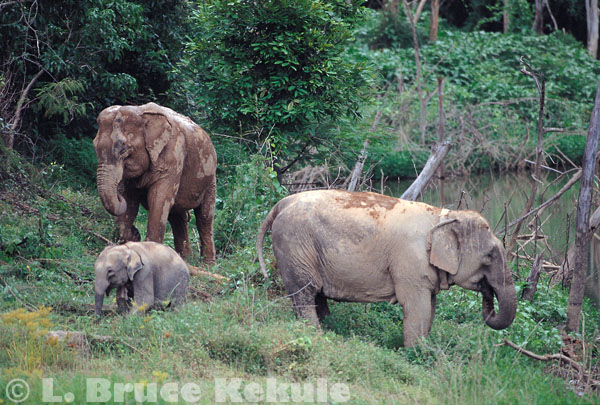
‘Pang Durian’ and two step-mothers in Kaeng krachan
A baby elephant wanders aimlessly around her mother lying dead on the ground. The confused young creature has no idea what the future holds as poachers move in to capture her. Her freedom is about to be taken away. Later her spirit will be broken and she will probably end up begging for food and money in some big town or tourist destination
The above scenario is all too common. The killing of mother elephants is perpetrated by some very unscrupulous people who then grab their young and sell them for cash. Other indigenous species like gibbon and langur are hunted down in a similar manner. The middleman and eventual buyers who create the demand for animals snatched from the wild seem to be insulated from the law. When will the killing and kidnapping stop?

Mother and baby tusker camera trapped at a mineral deposit in Kaeng Krachan
The cruelty of this illicit trade is epitomised by the remarkable but traumatic experience of ‘Pang Durian’, a female baby elephant abducted from Phraektakor Reserved Forest, just south of Kaeng Krachan National Park in Phetchaburi province. Her mother was killed by poachers in 1998 and the six-month-old was being kept at Ban Durian, a village just outside the park’s southern boundary. It was there, as she awaited sale on the black market, that she was given her name.
The young orphan was in very poor health. Luckily, however, Royal Forest Department (RFD) rangers in Kaeng Krachan heard about her and investigated. By the time they got to her, she was suffering from a deficiency of protein, calcium and other minerals that would normally come from mother’s milk. Her left leg had become bow shaped and deformed. The villagers hadn’t provided a nutritious, well-balanced diet, and malnutrition had set in.

Elephant family unit in Kaeng Krachan
After negotiations, ‘Pang Durian’ was traded for raw rice, other foodstuffs and construction materials. Shutat Sapphu, head of Ban Krang station in the park, took responsibility and looked after her for several months. Non-governmental organisations including the Wildlife Fund Thailand and Wild Animal Rescue Foundation took an interest in Pang Durian’s plight. After her health began to improve, the World Wide Fund for Nature (WWF-Thailand) moved her to the well-established Elephant Hospital at Mae Yao Reserve Forest in Lampang. For the next six months, she was in good hands. And her life was about to change for the better. Reintroduction into the wild was the plan.
In 1996, during a state visit to Thailand by Britain’s Queen Elizabeth and Prince Philip (then president of the WWF-International), Her Majesty the Queen announced her intention to initiate a reintroduction project for elephants in the Kingdom . The idea was to offer an alternative future to domesticated and traumatised elephants, to let them live out the remainder of their lives as nature had intended.
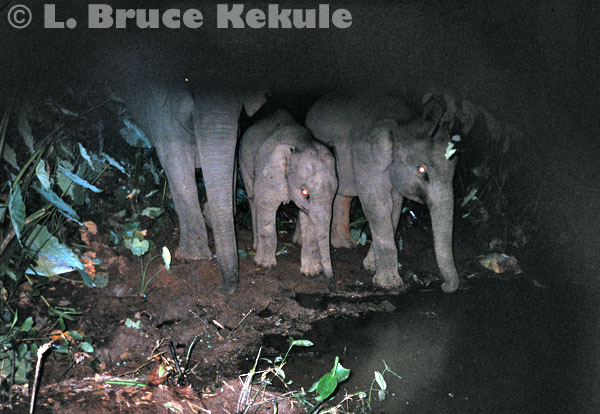
Family unit camera trapped in Khao Ang Rue Nai Wildlife Santuary
In January of 1997, the process officially began when Her Majesty released the first three female elephants ‘Pang Bualoi’, ‘Pang Boonmee’ and ‘Pang Malai’ into Doi Pha Muang Wildlife Sanctuary in Lampang. In February 1998, ‘Pang Sangwan’ and ‘Pang Khamnoi’ were let loose in the same sanctuary as, exactly a year later, were Pang Kammoon and her one-year-old male calf, Plai Song. (“Pang” and “Plai” are Thai prefixes denoting female and male elephants, respectively.)
Some 50 elephants are currently being kept in Lampang for future release and other wilderness areas are now being looked at for inclusion in the project, for which the government recently allocated a budget of 100 million baht. Support for the scheme has come from agencies including the Bureau of the Royal Household, the Thai Elephants Conservation Centre, the Forest Industry Organisation, RFD and WWF.
It was decided to release ‘Pang Durian’ along with four adult elephants (two male, two female) into Kaeng Krachan, the Kingdom’s largest national park. According to the park chief, there are about 200 wild elephants, in seven or eight different herds, living in the interior. The question is, after having become used to humans can elephants be introduced into an area where wild ones roam?
By now ‘Durian’ was more than two years old but she would still be very vulnerable to attack by tigers and leopards and susceptible to possibly recapture by humans. So two stepmothers, ‘Pang Buangern’ (Silver Lotus) and ‘Pang Buathong’ (Golden Lotus), were assigned to look after and protect her. The two males in the group bore the names ‘Plai Eak’ and ‘Plai Mangkorn’ — the latter a bull aged about 60.

Tuskless bull camera trapped on an old logging road in Kaeng Krachan
In late May 2000, the five elephants made the 900-kilometre trip from Lampang south to Phetchaburi; it took about 24 hours to cover the distance. A veterinarian named Dr Somkiat Trongwongsa along with a team of mahouts and RFD rangers working with WWF-Thailand were assigned to look after and monitor the group. One of the females had been fitted with a radio collar for satellite tracking. The group were released near the main entrance at Sam Yot (Three Peaks) Gate into Kaeng Krachan on June 1 of that year.
Sadly, ‘Plai Mangkorn’ was found dead of old age six months later, but the rest of the group continued to move in and out of the park. After the intense rains in late 2000, contact was lost for several months, but in mid-2001 the three surviving adults in the group were spotted near Sam Yot Gate. But Durian had disappeared and everyone feared the worst. Had she been taken by a tiger or lost in the thick jungle?

A tusker camera trapped by the Phetchaburi River in Kaeng Krachan
The three adults hung around the gate, refusing to go back into the park. It transpired that they had been chased away from several villages in the vicinity and were becoming a serious problem for the RFD. Eventually, almost a year after their release, it was decided that they should be sent back to Lampang.
In September 2002, while working with the RFD in Kaeng Krachan in conjunction with WWF-Thailand, I made a trip into the park to set up some infra-red camera-traps at mineral licks about 12 kilometres from Sam Yot Gate. The cameras were attached to trees on trails leading to the salt licks and left for one month.
‘Pang Durian’ camera trapped in Kaeng Krachan showing her bowed left front leg
Positive proof that she was surviving with a wild herd in the park
When the films were processed in October, low and behold, ‘Pang Durian’ was spotted passing one of the cameras at about 4 o’clock one morning, her deformed left leg clearly visible. It almost seemed as if she was saying, “Here I am!” Other elephants captured on the same roll of film around the same time meant that this remarkable little elephant was now obviously in good hands. She had come full circle and had been adopted by a herd. A magnificent testimony to the tenacity of Thai elephants and a wonderful Walt Disney ending to the whole scenario.
Actually, RFD rangers had told me earlier that they’d spotted ‘Durian’ one night near Ban Krang station. But this camera trap photo confirmed her continued existence in the park and the partial success of a difficult yet ultimately rewarding reintroduction program. According to Dr Somkiat, the Durian success story indicates that it will only be feasible to reintroduce young elephants, about five years old, into wild populations. A year later, I believe I caught her again on a camera trap but it was more difficult to identify her so I’m not sure if it was her or not. Someday I will find this photograph and re-evaluate it.
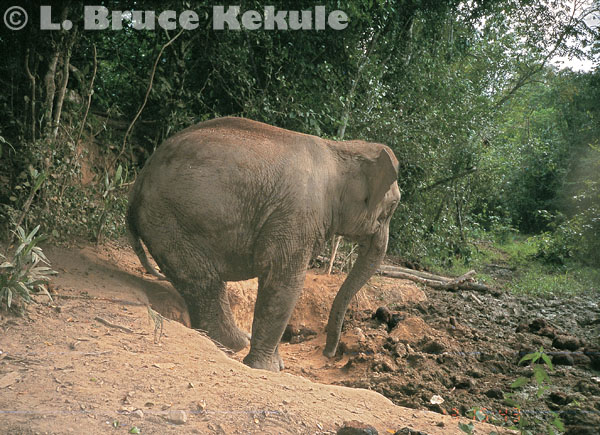
Tuskless bull in a mineral deposit in Kaeng Krachan
Countless conflicts have arisen between villagers and the real owners of the land; the creatures whose ancestors have lived there for thousands of years. Many elephants have been persecuted and killed by poisoning, gunshot wounds and electrocution (electric fences carrying an alternating current of 220 volts are used). Fireworks are set off to chase them out of mango orchards and pineapple plantations. But this tactic only frightens them temporarily; the elephants get bolder. Some have gone on the rampage tearing up villagers’ houses, RFD buildings and other facilities.
Wild elephants have also been killed or maimed by vehicles traveling along paved roads in protected areas where there are no speed limits in force. Accidents usually happen at night when the animals are difficult to spot until it is too late.
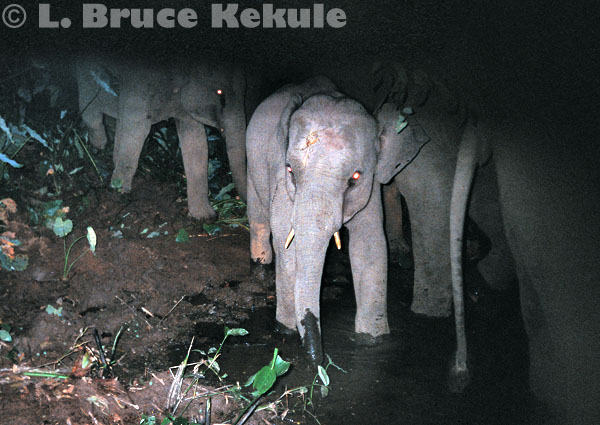
Young tusker elephant in Khao Ang Rue Nai just before
it was killed by a reckless driver on the road through the sanctuary
Above is a young tusker I camera trapped in Khao Ang Rue Nai Wildlife Sanctuary in Eastern Thailand. Two weeks after, he was hit and killed more than twenty kilometers away by a truck traveling at high speed on the road through the sanctuary. The driver was also killed but his wife next to him survived. The powers-to be have now closed the road from 9pm to 5am to allow animals freedom to use the road during the night. Road kill has dropped more than 50 percent and is considered a success in wildlife conservation and the authorities should be commended for taking action. This young tusker did not die in vain
Probably the most appalling treatment meted out to pachyderms is the beatings baby elephants snatched from the wild have to endure as their captors try to make them toe the line. Most are fed totally unsuitable food that lacks the necessary protein, minerals and vitamins. Later, these youngsters will be forced to ply the hot, dusty polluted streets of Thai towns begging for food and money.
Given the lax legislation concerning domesticated elephants, and poor enforcement, the future for these unfortunate animals is bleak. Continuous calls for change are ignored. Mahouts are still bringing elephants into urban areas and tourist traps. At one time, driving around Bangkok at night and you were almost certain to spot a huge gray beast plodding along with a red light or a CD attached to its tail. Even though this has been stopped by the BMA city officials, it still goes on in other parts of Thailand where there are late-night eateries and tourists.
One can only hope that the ‘Pang Durian’ success story will wake people up to the plight of these noble beasts which has played such an important role in Thai traditions, belief systems, culture, society and politics, and which has been involved in almost every important event in the Kingdom’s history.
Once featured on the Thai flag, the elephant is still a national symbol in which we should take pride. It needs our love and compassion, plus our help and respect. Without that, the magnificent Asian elephant is doomed.
Gurney’s Pitta – On the verge of extinction
The Gurney’s Pitta – Thailand’s rarest bird
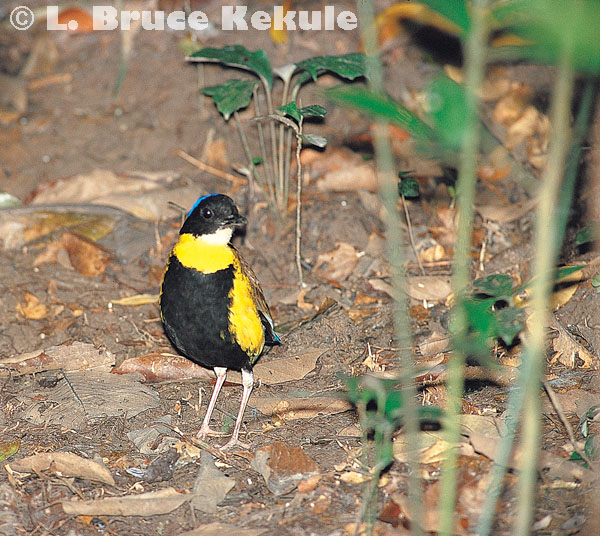
Gurney’s Pitta in Khao Phra Bang Khram
The dark morning stillness of thick lowland rainforest of Khao Nor Chuchi, Krabi province, is broken by thumping footsteps as two humans move slowly down the trail. We carry heavy photographic equipment to a photo-blind set the previous evening, deep in the jungle. Precipitation is heavy as I set up in the hide. My helper departs quickly, conveying the message to the wildlife in the area that the intruders have left.

The ‘Emerald Pool in Khao Phra Bang Khram
Animals of the night fade into their homes and the ecosystem enters its daylight cycle. As morning light awakens the rainforest, sounds of dripping moisture begin to subside while forest birds and insects start their incessant calls as they have for millions of years.
Well hidden in the blind, I settle down, ever-vigilant for any movement on the forest floor. As the sun arches into the sky, light filters through the forest canopy in patches, illuminating the surroundings. There is a movement near the trail and a Hooded Pitta, common to this forest, hops about looking for food. The striking little blue-green bird with dark brown crown moves closer to the blind seemingly unconcerned about the looming structure.
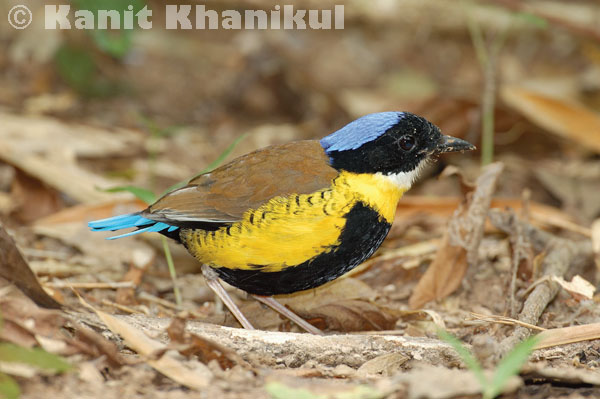
Gurney’s pitta male
Snapping a few shots of the feathered creature but not wanting to alarm the other inhabitants of the forest, I continue to sit quietly hoping the spirits of the forest will answer my wish.
A morning rain shower passes by but quickly dissipates. As if on cue, a small black and yellow bird magically appears in front of the photo-blind, catching my eye. It’s the creature I’ve been waiting for: the Gurney’s Pitta!

Gurney’s pitta male
The little bird, perhaps sensing danger, quickly disappears into the darkness of the jungle but within minutes, is back again just long enough for only one shot with the camera.
The chance to see and photograph the Gurney’s Pitta, one of the rarest species in the world, has been my goal for several years. And this particular forest is the last known habitat for the bird which is both Thailand ‘s most endangered and a flagship species for the conservation of southern Thailand ‘s lowland rainforest.

Gurney’s pitta female
Gurney’s Pitta (Pitta gurneyi), or sometimes-called Black-breasted Pitta, is a small terrestrial forest bird endemic to Thailand and Burma . The male, with golden brown wings, bright yellow upper breast and flanks, black head and lower breast, white throat and brilliant iridescent blue crown and tail feathers, is striking indeed. The female is less colourful but, nevertheless, also very beautiful.
The species nests in spiny under-story palms laying three to four eggs but usually fledging at most two or three young. They hop about the forest floor and eat mainly insects and earthworms found amongst leaf litter but also take snails and little frogs.

Banded Pitta male
Extremely secretive, they keep as much jungle between themselves and any intruders. When danger approaches, they hop into the underbrush and disappear.
Of the world’s 31 known pittas, found from Africa to the Solomon Islands , and from Japan through Southeast Asia to New Guinea and Australia , 12 species are found in Thailand . They are Gurney’s, Giant, Banded, Hooded, Blue-winged, Blue, Blue-rumped, Eared, Mangrove, Garnet, Rusty-naped and Bar-bellied, of which the first five mentioned are found at Khao Nor Chuchi. The probable geographic origin of the Family Pittidae is in the Indo-Malayan region.
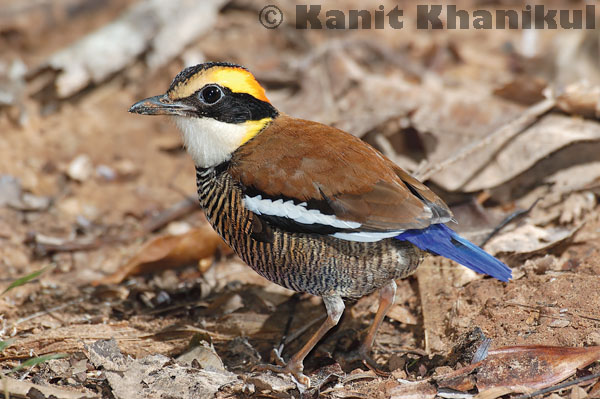
Banded Pitta female
Gurneys Pitta was first discovered in 1875 by W. Davison, a wildlife specimen collector working in Southern Burma for Allan Octavian Hume, a British civil servant working in India , and doyen of ornithology at that time. The bird was named after Humes friend, J.H. Gurney of the English county of Norfolk , and a fellow of the Zoological Society of London.
In the early 20th century, the bird was actually considered common in southern Thailand . Around the 1980s, it was thought to be extinct after no reported sightings had taken place for at least three decades. Then, in 1986, Philip Round, Thailand ‘s top birder, rediscovered the Gurney’s Pitta at Khao Nor Chuchi. It was big news for bird conservation groups and was heard around the world.
Historically, the world range of Gurney’s Pitta was a small concentrated area of lowland semi-evergreen forest along the coast and inland areas of the Thai peninsula, in the provinces of Trang, Krabi, Nakhon Si Thammarat, Surat Thani and Chumphon and Prachuap Khiri Khan. However, the once magnificent lowland tropical forest, its diversity of flora and fauna unsurpassed, has disappeared from most of those areas, due to man’s incessant greed, and his urge to destroy natural forest for the sake of agriculture and profit.
Khao Nor Chuchi, at Khao Pra-Bang Khram Wildlife Sanctuary, Khlong Thom district, Krabi, about 56 kilometres southeast of the provincial capital, is the last known site for Gurney’s Pitta in Thailand . Khao Pra-Bang Khram, with its headquarters at Ban Bang Tieo village, was established as a non-hunting area in 1987 by the Royal Forest Department (RFD), at the behest of Bangkok Bird Club (now Bird Conservation Society of Thailand-BCST), specifically in order to protect Gurney’s Pitta. It was upgraded to a wildlife sanctuary in 1993, with a total area of 183 square kilometres.
The Emerald Pool (Sa Morakot) within Khao Pra-Bang Khram Wildlife Sanctuary is a beauty spot visited by many local and foreign tourists. There are many trails open to nature explorers and bird watchers known as Thung Tieo Nature Trail Network. At least 318 different bird species have been recorded here.
The site’s alternative name, Khao Nor Chuchi, comes from the 650-metre-high conical mountain which overlooks the area. Bird photographers also come to Khao Nor Chuchi after images of the Gurney’s.
Many people, after travelling thousands of kilometres from different parts of the world, have left very disappointed after not seeing or photographing it. Gurney’s Pitta is a tough bird even to see, let alone photograph.
Although the species once occupied about 40 square kilometres of this area, most of the extreme lowlands where they live and breed were excluded from the sanctuary. As a result, forest is still being destroyed to grow rubber, oil palm and coffee, and human settlement has taken up most of the area.
Villagers still engage in poaching of animal and forest products from the reserved forest. On the day I photograph this Gurney’s Pitta, I still heard a gunshot.
Pitta numbers at Khao Nor Chuchi have declined drastically in the last two decades from an estimated 40 pairs in 1986, down to 21 pairs in 1992. This slide was due primarily to uncontrolled forest destruction, perhaps abetted by capture of the species for the black market trade in forest birds, and even for some government-run zoos.
According to BirdLife International’s Red Data there were only 11 breeding pairs and two extra males remaining in mid-2000. This year, only four to five nests have been found and sightings of individual birds have been minimal. At one nest that was abandoned, local birdwatchers found bird-nets put there by villagers who used the nets to capture the birds.
The species was also found along the coast and inland at the most southern tip of Burma but no reports of them have come from there since about 1914 and it is anybody’s guess whether it still survives. No surveys can be done due to inaccessibility of the area and danger of land mines. Tough government regulations have also kept most researchers away from the area.
BirdLife International, BirdLife Denmark , and NGOs such as BCST and the Oriental Bird Club have implemented a number of projects at Khao Nor Chuchi, in collaboration with RFDs Wildlife Conservation Division. However, these have slowed, but not halted, new settlements and further forest clearance.
Ultimately, unless the wildlife sanctuary can be expanded to encompass all remaining lowland forest, and previously cleared areas reforested, Gurney’s Pitta faces a very bleak outlook for survival. This magnificent bird could disappear before we know it and that would be a sad day for conservation in Thailand .
With just 11 breeding pairs left, the Gurney’s Pitta is very likely to be the first species to go extinct in this millennium, unless all parties concerned join hands in protecting it. On the day this male bird was photographed, a gunshot was heard.